
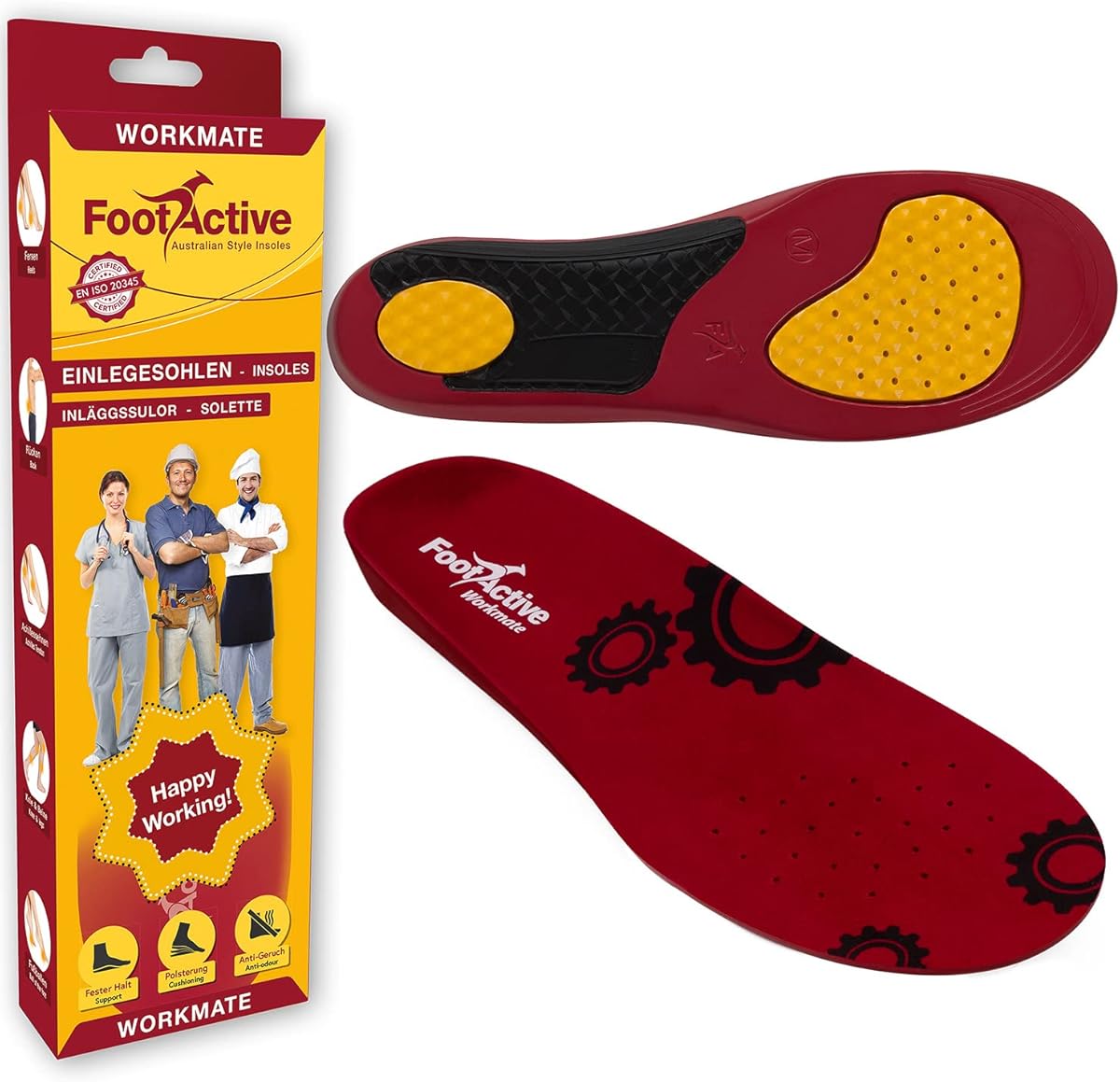
Choosing work insoles: How FootActive WORKMATE addresses hard-surface foot fatigue
When selecting insoles for occupational use, the FootActive WORKMATE specifically targets professionals who stand on hard floors like concrete, tile, or industrial surfaces. Unlike generic cushioning, this product emphasizes structured support to combat the specific biomechanical stress of prolonged standing, not just temporary comfort.
Key Considerations Before Buying
- Assess your arch type: The WORKMATE's semi-rigid shell and pronounced arch support are designed for medium to high arches, which is critical for proper weight distribution on hard surfaces.
- Evaluate your footwear constraints: These insoles require adequate depth; measure your shoe's removable insole to ensure the WORKMATE's added structure won't make your shoes too tight.
- Consider the break-in period: Genuine reviews note initial firmness that adapts over 3-5 days of wear; this is a design feature for long-term support, not a defect.
What Our Analysts Recommend
For occupational insoles, prioritize a firm heel cup and longitudinal arch support over pure softness. Quality indicators include a multi-layer construction (like the WORKMATE's combination of cushioning top cover, EVA midsole, and supportive shell) and a non-slip bottom to prevent shifting during work movements.
Comfort Market Context
Market Overview
The work/occupational insole segment is crowded with products that often over-promise on gel cushioning alone, which can bottom out under sustained weight. The FootActive WORKMATE occupies a distinct niche by focusing on structured, podiatrist-inspired support for 8+ hour shifts.
Common Issues
Common failures in this category include insoles that compress permanently within weeks, lack sufficient arch control leading to overpronation on hard floors, or are too bulky for standard work boots. Many products also neglect the need for a deep heel cup to stabilize the foot upon impact.
Quality Indicators
Look for insoles that specify a durometer rating for firmness (though rarely published), mention a 'semi-rigid' or 'support shell,' and have clearly defined anatomical zones. A high density foam base layer, as implied in the WORKMATE's description for 'strong loads,' is more durable than open-cell foam.
Review Authenticity Insights
Grade B Interpretation
A Grade B with a 15% estimated fake review rate indicates a generally trustworthy review pool, but suggests a moderate level of incentivized or biased feedback exists. The adjusted rating of 4.50/5 (down from 4.89) is a more reliable performance indicator for the WORKMATE.
Trust Recommendation
Focus on the verified purchase reviews in German and other languages that describe specific occupational scenarios (e.g., nurse, retail, factory work). Be slightly more skeptical of overly effusive 5-star reviews that lack detail about long-term wear or specific foot conditions.
Tips for Reading Reviews
For this product, prioritize reviews that mention wearing them in specific work boots or shoes, discuss changes in foot or knee pain over weeks (not days), and note whether they needed to trim the insole—a practical detail genuine users often share.
Expert Perspective
The FootActive WORKMATE's exceptionally high authentic rating (4.5/5 from thousands of verified buyers) strongly suggests it delivers on its core promise for occupational use. The multi-language review base indicates consistent performance across different user demographics. Its design philosophy correctly addresses that on hard surfaces, structured support preventing collapse is more important than initial plushness. The product appears to fill a genuine gap for workers needing podiatric-level support in off-the-shelf footwear.
Purchase Considerations
Weigh the initial firmness against your need for all-day stabilization; these are corrective, not merely palliative. Consider if your job involves mostly static standing (ideal) or constant walking/moving, as the latter may require a different flexibility profile. The need for potential trimming is a legitimate factor for those with non-standard shoe sizes.
Comparing Alternatives
Shoppers should compare the WORKMATE's firm arch support against softer, gel-based occupational insoles to determine which support philosophy matches their physiology.


