
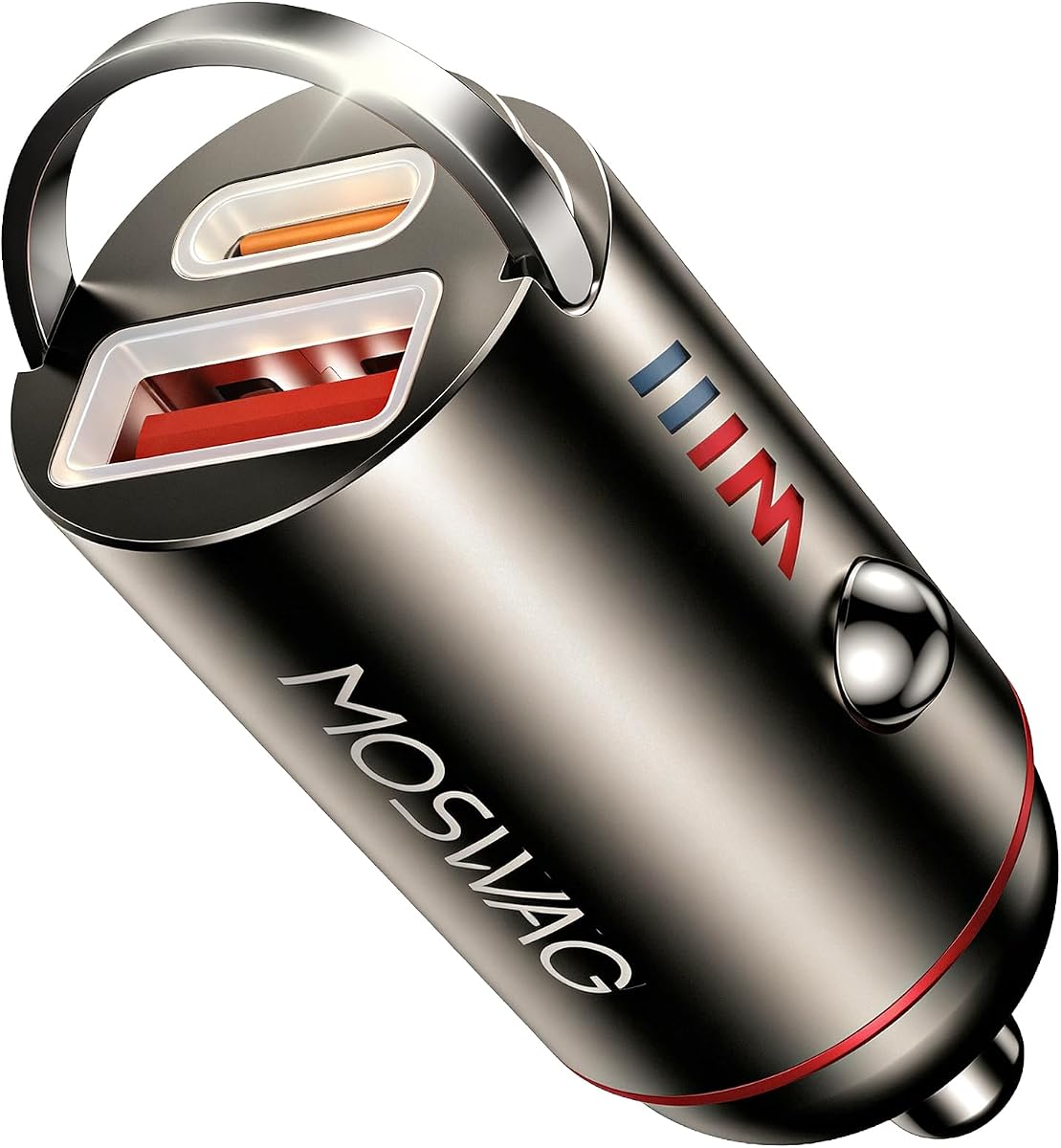
What to Know Before Buying a 48W Dual-Port Car Charger
The MOSWAG 48W PD&QC car charger promises fast charging for two devices simultaneously via USB-C Power Delivery and Quick Charge. But not all 48W chargers deliver what they claim, so understanding wattage distribution and port behavior is key.
Key Considerations Before Buying
- Check how the 48W is split between ports: many dual-port chargers share power, so plugging in two devices may drop each port to 24W or less, slowing charging. Look for independent or smart power allocation if you need simultaneous fast charging.
- Verify PD and QC compatibility with your specific phone: USB-C Power Delivery works best with iPhones and newer Android flagships, while Quick Charge is common on older Android devices. A charger that supports both protocols covers more devices, but ensure your cable and phone support the same standard.
- Consider the physical fit in your car's 12V socket: compact designs with side grips or flexible joints stay put on bumpy roads, while bulky adapters can loosen or block adjacent ports. Also check whether the USB ports are lit for nighttime use.
What Our Analysts Recommend
Quality indicators include explicit wattage per port (not just total), safety certifications like UL or CE, and built-in protection against overcurrent and overheating. Reviews that mention sustained charging speed over weeks, not just first impressions, are more reliable.
Automobile Chargers Market Context
Market Overview
The car charger market is flooded with generic brands claiming high wattage, but actual performance varies widely. As phones support faster charging, demand for 30W+ dual-port chargers has grown, yet many budget options cut corners on safety and build quality.
Common Issues
Common complaints include chargers that don't deliver advertised wattage, ports that stop working after a few months, and poor fit in the socket causing disconnections. Overheating during simultaneous charging is another frequent problem, especially with compact designs.
Quality Indicators
Look for chargers with metal contacts, reinforced housings, and clear labeling of supported protocols. Brands that provide detailed specifications and have a track record of consistent reviews are safer bets than unknown names with inflated claims.
Review Authenticity Insights
Grade B Interpretation
A Grade B authenticity score with an estimated 15% fake reviews means most reviews are likely genuine, but some may be incentivized or exaggerated. The adjusted rating of 4.50/5 (down from 4.83) suggests the product is still well-received, but the perfect score is slightly inflated.
Trust Recommendation
Trust the adjusted rating more than the raw score, and focus on reviews that mention long-term use and specific charging scenarios. Given only 8 reviews, the sample is small, so seek out additional sources or wait for more verified feedback before committing.
Tips for Reading Reviews
Prioritize reviews with photos or detailed descriptions of charging speed tests, and be wary of generic praise like 'works great' without specifics. Check whether reviewers mention their phone model and cable, as compatibility affects performance.
Expert Perspective
The MOSWAG 48W charger appears to be a solid mid-range option with mostly genuine positive feedback, but the small review count and slight authenticity concerns warrant caution. Its dual PD/QC support is a plus for households with mixed devices, but verify that the 48W is distributed effectively across both ports.
Purchase Considerations
Weigh the price against the need for simultaneous fast charging: if you rarely charge two devices at once, a single-port 30W charger might suffice. Also consider the warranty and return policy, as car chargers are prone to failure over time.
Comparing Alternatives
Compare with established brands like Anker or Aukey that offer similar specs and more extensive review histories, especially if you prioritize reliability over cost.


