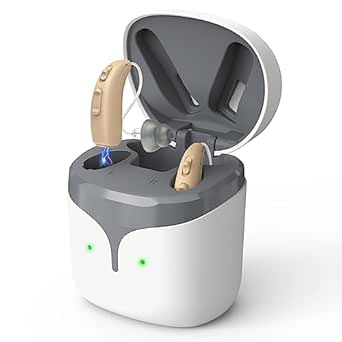
What to Know Before Buying Rechargeable ITE Hearing Aids
Rechargeable in-the-ear (ITE) hearing aids like this white model promise cable-free convenience with auto on/off functionality, but fit and amplification quality vary widely across budget devices. Before purchasing, understand how ITE design, charging habits, and Canadian regulatory context affect your daily experience.
Key Considerations Before Buying
- ITE aids sit entirely in the ear canal or bowl, so comfort depends on shell size and ear anatomy—look for multiple ear-tip sizes or a return window if you have narrow or sensitive canals. Rechargeable models eliminate battery swaps but require a charging case and daily docking discipline.
- Auto on/off sounds convenient, but verify how it triggers—removal from the charger, a motion sensor, or a physical switch—since inconsistent activation is a common complaint among budget hearing aid buyers. Confirm battery life per charge (typically 12–20 hours) and whether the case holds multiple charges for travel.
- This is an over-the-counter style device sold in Canada, where hearing aids are regulated medical devices; check whether the seller provides a warranty, a trial period, and clear fitting instructions. Without a professional audiogram, you are self-fitting, so adjustable volume and program modes matter more than premium features.
What Our Analysts Recommend
Prioritize models with verified purchase reviews mentioning long-term durability, clear speech in noisy environments, and responsive customer support. Look for explicit battery hour ratings, ear-tip variety, and a stated return policy, since ITE fit is the single biggest determinant of satisfaction.
Hearing Aids Market Context
Market Overview
The hearing aid market is shifting toward direct-to-consumer and over-the-counter options, with rechargeable ITE designs becoming a popular entry point for mild-to-moderate hearing loss. In Canada, regulatory oversight means quality varies sharply between certified devices and generic amplifiers marketed as hearing aids.
Common Issues
Buyers frequently report feedback squeal, poor fit causing discomfort, short battery life after several months, and unclear distinction between amplification and true hearing aid processing. Charging case failures and difficulty obtaining replacements for proprietary ear tips are recurring pain points.
Quality Indicators
Strong indicators include transparent battery specifications, replaceable ear tips, a Canadian warranty or service address, and reviews that describe specific listening scenarios rather than generic praise. Devices with adjustable volume controls and noise-reduction modes tend to score better in verified reviews.
Review Authenticity Insights
Grade B Interpretation
A Grade B with an estimated 15% fake review rate means most reviews are genuine, but a meaningful minority may be incentivized or inflated. The adjusted rating of 4.30 versus the displayed 4.67 suggests the true customer satisfaction is solid but not exceptional for this price tier.
Trust Recommendation
Trust the adjusted 4.30 rating more than the headline 4.67, and focus on verified purchase reviews that mention months of use. Given the 15% suspicious share, avoid making a decision based on a handful of glowing five-star reviews alone.
Tips for Reading Reviews
Read mid-range three- and four-star reviews first—they tend to describe real trade-offs like fit issues or charging quirks. Look for reviewers who mention hearing loss severity, ear canal size, and how long they have owned the device, as those details are harder to fabricate.
Expert Perspective
This rechargeable ITE hearing aid earns a credible adjusted rating of 4.30 from 378 reviews, indicating generally satisfied buyers with some legitimate fit and performance complaints. The auto on/off and rechargeable design are practical conveniences, but the Grade B authenticity score and 15% estimated fake reviews mean the displayed 4.67 overstates consensus. For a white ITE model in the Canadian OTC space, it is a reasonable entry option if you confirm warranty and return terms.
Purchase Considerations
Weigh the convenience of rechargeability against the need for daily charging and potential battery degradation over time. Confirm the seller's Canadian return policy and warranty length, and consider whether your hearing loss is mild enough for a self-fitting device rather than a professionally programmed aid.
Comparing Alternatives
Compare this model with other rechargeable ITE aids that offer replaceable ear tips, longer stated battery life, or clearer Canadian service support before committing.