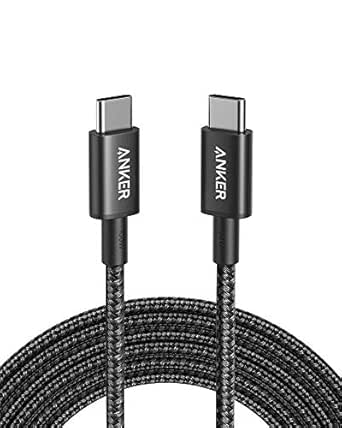
Right-Angle USB-C Cables: What to Know Before You Buy
Right-angle USB-C cables like this 6.6ft 2-pack solve a specific problem: keeping the connector out of the way when charging phones, tablets, or laptops in tight spaces. With 60W power delivery and a 90-degree head, they're built for gamers, bedside chargers, and car mounts—but not every right-angle cable handles fast charging or data equally well.
Key Considerations Before Buying
- Confirm the cable supports the wattage your device needs. This model is rated for 60W (20V/3A), which covers most phones and tablets but won't max out a 16-inch MacBook Pro that can draw up to 140W.
- Check which direction the 90-degree connector points. Right-angle cables come in up/down and left/right orientations; the wrong one can block adjacent ports or point the cable toward you instead of away.
- Decide whether you need data transfer or just charging. Many right-angle cables are charge-only; this one advertises data, but verify the speed (often USB 2.0 at 480Mbps) matches your needs for file transfers or video.
What Our Analysts Recommend
Look for explicit wattage and data-speed ratings rather than vague 'fast charging' claims, and check for reinforced strain relief at the 90-degree bend—that's where right-angle cables typically fail first. A 2-pack at 6.6ft each is convenient for multiple locations, but confirm the cable jacket material and connector housing are durable enough for daily flexing.
USB Cables Market Context
Market Overview
The USB-C cable market is flooded with unbranded options that often overstate charging speeds and durability. Right-angle variants are a niche but growing segment, popular for mobile gaming and wall-mounted charging setups, yet quality varies widely because the bent connector adds stress points.
Common Issues
Common complaints include cables that charge slowly because they lack proper e-marker chips for higher wattage, right-angle heads that loosen or crack at the bend, and data transfer that's slower than advertised. Buyers also report compatibility surprises with certain phone cases that block the angled connector.
Quality Indicators
A trustworthy right-angle USB-C cable lists exact power (e.g., 60W/3A) and data specs, uses reinforced TPE or nylon braiding at the joint, and has reviews mentioning long-term use without fraying. Certifications like USB-IF are a plus, though many budget cables skip them.
Review Authenticity Insights
Grade A Interpretation
An A authenticity grade with an estimated 8% fake review rate is strong for this category, where fake reviews are rampant. The 5.00 rating from 18 reviews is high but based on a small sample; the adjusted 4.80 rating suggests the feedback is largely credible and not artificially inflated.
Trust Recommendation
You can generally trust the review sentiment here, but treat the perfect 5.00 score with mild caution given the low review count. Look for reviews that mention specific devices and charging scenarios—those are the most reliable signals for a cable like this.
Tips for Reading Reviews
Focus on reviews that name the device used (e.g., iPhone 15 Pro Max, Samsung Galaxy) and comment on charging speed or the right-angle fit. Skip generic 'great cable' reviews and prioritize ones that mention durability after weeks or months of use.
Expert Perspective
This right-angle USB-C to USB-C cable 2-pack offers a practical form factor and 60W charging at a budget-friendly price point, backed by unusually authentic-looking reviews for the category. The 6.6ft length is generous for bedside or couch use, and the 90-degree connector is genuinely useful for handheld gaming or tight wall outlets. However, 60W won't satisfy high-power laptop users, and data speed is likely limited to USB 2.0—fine for charging, less so for large file transfers.
Purchase Considerations
Buy this if you mainly charge phones, tablets, or lower-power laptops and want a tidy right-angle setup in multiple rooms. Skip it if you need 100W+ charging for a MacBook Pro or fast data transfers, or if your phone case is thick around the port.
Comparing Alternatives
Compare with straight USB-C cables or higher-wattage right-angle options from brands with USB-IF certification if your needs exceed 60W or require faster data.