
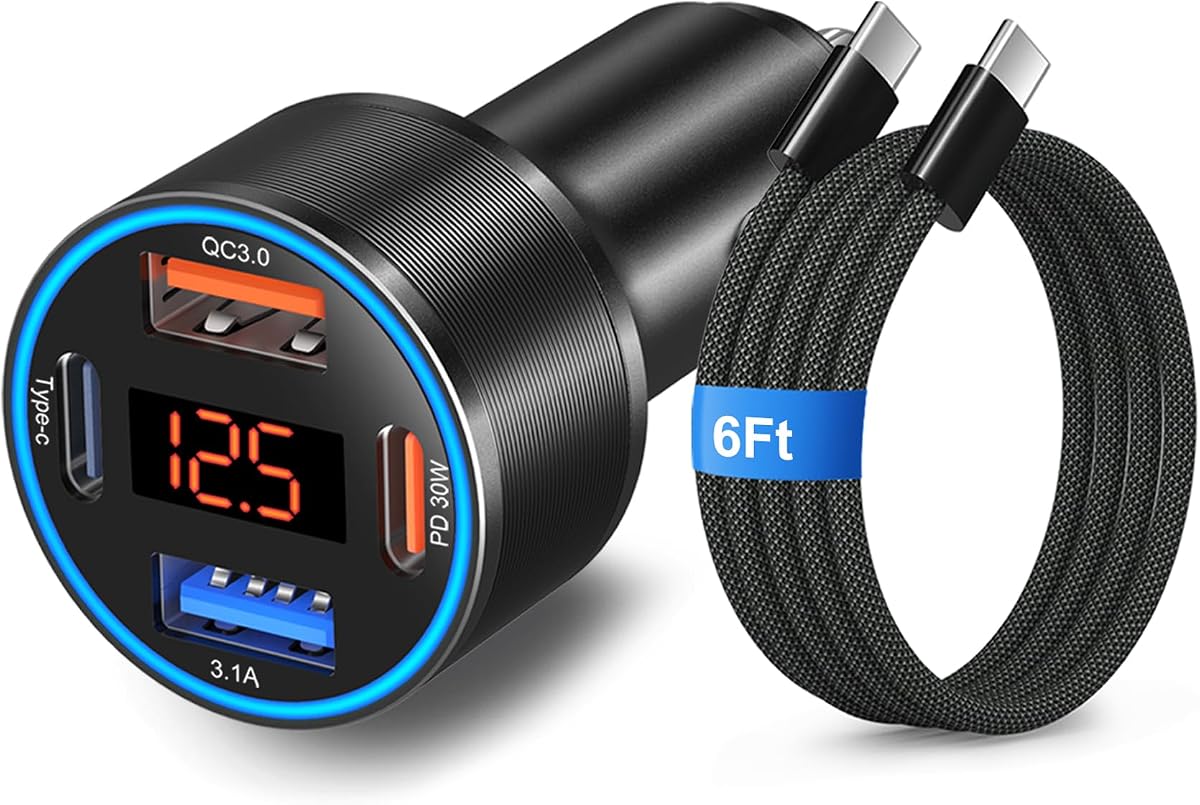
What to Know Before Buying a 65W 4-Port USB-C Car Charger
A 65W four-port car charger like this one promises to turn your 12V cigarette lighter into a multi-device power hub, but not all high-wattage adapters deliver as advertised. With USB-C Power Delivery now common on phones and laptops, understanding port sharing, voltage stability, and fit is essential before you buy.
Key Considerations Before Buying
- Total wattage is shared, not per-port: a 65W rating usually means the USB-C PD port maxes out around 45–65W only when other ports are idle, so charging a laptop and two phones simultaneously will slow every device. Check the per-port output table rather than the headline number.
- Cigarette lighter sockets vary in depth and grip: some vehicles have shallow or loose 12V sockets, so look for a charger with a firm spring-loaded contact and a compact barrel that won't pop out on rough roads. A loose fit causes intermittent charging and heat buildup.
- Voltage display and safety features matter more than port count: a built-in voltmeter helps you spot a weakening car battery, while overcurrent, overvoltage, and temperature protection prevent damage to expensive devices. Four ports drawing power generate heat, so thermal design is a real consideration.
What Our Analysts Recommend
Prioritize chargers that list PD 3.0 or PPS support, explicit per-port wattage, and certified safety markings rather than vague 'fast charge' claims. A metal barrel with good spring tension and a readable voltage display are practical quality signals in this category.
Automobile Chargers Market Context
Market Overview
The car charger market is flooded with unbranded multi-port adapters, and 65W–100W USB-C models have become the new baseline as more drivers charge laptops and tablets on the road. Prices span from under $15 to $40+, but output consistency and safety certification vary widely across listings.
Common Issues
The most frequent complaints in this category are chargers that fall out of loose 12V sockets, ports that don't deliver advertised wattage when shared, and overheating during long drives. Some units also interfere with FM radio or fail after a few months of summer heat exposure.
Quality Indicators
Reliable car chargers specify PD/QC protocols, list individual port outputs, and carry safety certifications like CE, FCC, or UL. A metal housing, visible voltage readout, and consistent customer reports about fit and heat are stronger quality signals than high star counts alone.
Review Authenticity Insights
Grade B Interpretation
A Grade B with an estimated 15% fake review rate means most reviews are genuine, but roughly one in seven may be inflated or incentivized. The adjusted 4.50/5 rating is still strong, though lower than the raw 4.89/5, suggesting the product is well-liked but not flawless.
Trust Recommendation
Trust the adjusted rating more than the headline score, and weight reviews that mention specific details like charging speed, voltage display accuracy, or socket fit. Be cautious of short five-star reviews that repeat marketing phrases without describing actual use.
Tips for Reading Reviews
For car chargers, focus on reviews that name the vehicle or device charged, since fit and performance vary by car and phone. Look for comments about heat, port sharing, and long-term durability rather than first-impression praise.
Expert Perspective
This 65W four-port charger sits in a competitive but uneven category, and its adjusted 4.50 rating with 239 reviews suggests solid real-world performance. The review analysis indicates buyers are commenting on concrete features—charging speed, voltage display, and cigarette-lighter fit—which are exactly the traits that separate good car chargers from disappointing ones. Still, the 15% estimated fake review share means the raw 4.89 score should be read with some skepticism.
Purchase Considerations
Weigh whether you actually need four ports or would be better served by a simpler two-port unit with higher per-port output. Confirm the charger's USB-C PD wattage meets your largest device's needs and that its barrel fits your vehicle's 12V socket securely.
Comparing Alternatives
Compare this model against other 65W car chargers that publish detailed per-port specs and carry recognized safety certifications before deciding.


