What to Know Before Buying a Rechargeable 6-Inch Digital Caliper
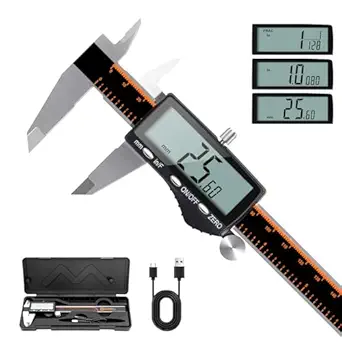
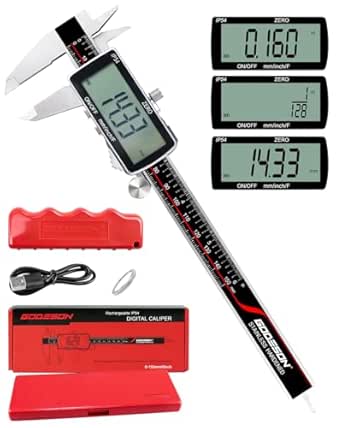
A rechargeable digital caliper like the CDKC 6-inch model eliminates the hassle of hunting for button-cell batteries, but it introduces its own set of trade-offs in charging, build, and accuracy. Understanding how these calipers are powered and how they hold tolerance will help you decide if this tool fits your shop or hobby bench.
Key Considerations Before Buying
- Charging method and runtime: Rechargeable calipers typically use a built-in lithium battery charged via USB, so confirm the connector type and whether the display shows charge status. A caliper that dies mid-measurement or lacks a low-battery warning can be frustrating in the middle of a project.
- Measurement resolution and accuracy: Most 6-inch digital calipers offer 0.01 mm / 0.0005 in resolution, but real-world accuracy depends on jaw rigidity and scale quality. Look for stated accuracy tolerances and check whether the caliper can hold zero across repeated open-close cycles.
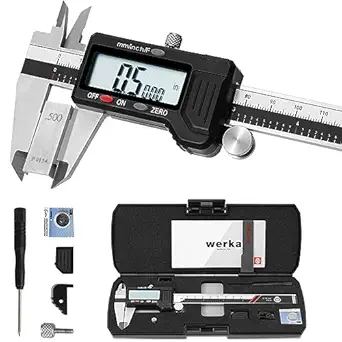
- Jaw quality and slide smoothness: Stainless steel jaws resist wear better than plated or plastic variants, and a smooth, consistent slide with minimal play is a better indicator of quality than a feature list. Also consider whether the thumb roller is comfortable for one-handed use.
What Our Analysts Recommend
Prioritize a caliper with a rigid beam, crisp LCD, and a charging system that is easy to top up between sessions. Check that the zero function and unit switching are responsive, and that the battery compartment or charging port is sealed against dust and coolant if you work in a shop environment.
Digital Calipers Market Context
Market Overview
The digital caliper market is crowded with budget imports and premium metrology brands, and rechargeable models are a relatively recent niche aimed at reducing battery waste and downtime. At the consumer end, prices vary widely, but the underlying sensor and scale technology often differs more than the spec sheets suggest.
Common Issues
Common complaints in this category include inconsistent zeroing, jaws that flex under pressure, and displays that dim or fail after light use. Rechargeable units add the risk of proprietary or hard-to-replace batteries, so battery longevity and serviceability are worth checking.
Quality Indicators
Better calipers tend to have stainless steel construction, smooth and repeatable jaw movement, and clear documentation of accuracy and resolution. A well-sealed housing and a standard charging connector are practical signs that the manufacturer considered real-world use.
Review Authenticity Insights
Grade B Interpretation
A Grade B authenticity rating with an estimated 15% fake review rate means the review pool is mostly trustworthy but not pristine. The adjusted rating of 4.40/5 versus the displayed 4.80/5 suggests some reviews may be inflating the score, though the gap is moderate rather than alarming.
Trust Recommendation
Treat the 4.40 adjusted rating as the more realistic signal and read the detailed reviews for mentions of accuracy, charging reliability, and jaw play. Because all reviews are verified purchases, the risk of entirely fabricated reviews is lower, but still cross-check with independent sources before buying.
Tips for Reading Reviews
For calipers, focus on reviews that mention specific measurements, tolerances, or repeated-use experiences rather than vague praise. Look for comments about zero drift, battery life after several months, and how the caliper performs on rounded or hard-to-reach surfaces.
Expert Perspective
The CDKC 6-inch rechargeable digital caliper appears to be a credible budget-friendly option with a solid adjusted rating of 4.40/5 across 56 reviews. The rechargeable design is a genuine convenience for frequent users, but the moderate fake-review estimate means buyers should weigh the adjusted score over the headline rating. Overall, it looks suitable for hobbyists and light professional use, provided expectations are set around precision and long-term battery serviceability.
Purchase Considerations
Weigh whether the rechargeable feature is worth the potential battery replacement hassle versus a standard coin-cell caliper, and confirm the accuracy tolerance meets your work. If you need certified precision for machining or inspection, consider stepping up to a name-brand metrology caliper.
Comparing Alternatives
Shoppers should compare this model with other 6-inch digital calipers in the same price band, including both rechargeable and battery-powered options, to balance convenience, accuracy, and durability.