
Pumice Stones for Toilet Rings: What to Know Before You Buy
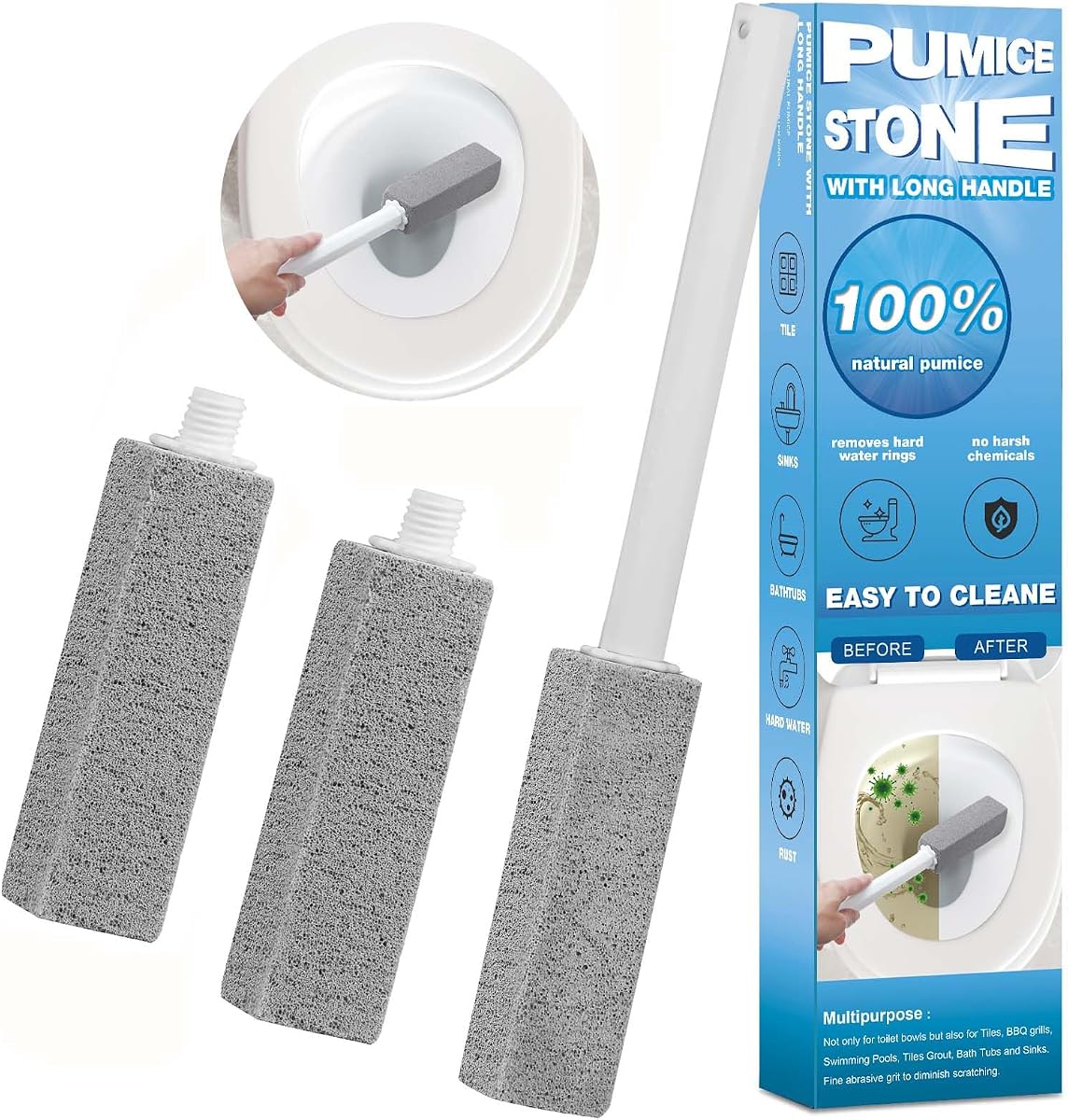
This three-pack of pumice cleaning stones with extra-long handles targets the stubborn hard-water rings and mineral stains that regular brushes can't budge. Unlike a bare pumice block, the long handle lets you reach deep into toilet bowls, tubs, and grills without scraping your knuckles on porcelain or hot grates.
Key Considerations Before Buying
- Pumice is abrasive by nature, so it works best on porcelain, concrete, and cast iron—but can dull or scratch softer surfaces like acrylic tubs, stainless steel, and enameled finishes. Check your fixture material before scrubbing.
- The 'extra long handle' is the standout feature here: it keeps your hands out of the bowl and gives leverage for vertical scrubbing on toilet rings. Confirm the handle length suits your reach and that it stays firmly attached under pressure.
- Pumice stones wear down with use, so a three-pack makes sense for households tackling multiple jobs—toilet, tub, grill, pool tile, and sink. Expect each stone to shrink over time rather than last indefinitely.
What Our Analysts Recommend
Look for stones with a securely mounted handle that won't wobble or detach mid-scrub, and a grit that feels dense rather than crumbly. A uniform, well-formed pumice block resists premature breakage; overly porous or chipped stones tend to shed grit and wear out fast.
Pumice Stones Market Context
Market Overview
Pumice stones sit in a crowded niche of the cleaning market, competing with chemical descalers, drill-mounted brushes, and acid-based toilet cleaners. The handle-equipped multipacks are a newer twist, appealing to shoppers who want a low-cost, chemical-free way to attack mineral deposits.
Common Issues
The biggest complaint in this category is surface damage—users scratch acrylic or stainless fixtures by scrubbing too hard with an abrasive stone. Stones that break apart or handles that snap under pressure are the other recurring frustration, along with pumice residue clogging drains if not rinsed away.
Quality Indicators
A quality pumice stone feels dense and consistent, with no loose grit or visible cracks, and the handle should be molded or bonded securely rather than glued loosely. Reputable listings specify which surfaces the stone is safe for, which signals the seller understands the product's limits.
Review Authenticity Insights
Grade A Interpretation
A Grade A authenticity rating with an estimated 5% fake review rate is about as clean as Amazon listings get—the adjusted 4.90 rating barely dips from the 5.00 headline score. That consistency suggests the near-perfect reviews reflect real buyer satisfaction rather than a manipulated rating.
Trust Recommendation
You can treat the review consensus as reliable: 519 reviews with verified purchases and detailed accounts of removing hard-water rings are a strong signal. Still, scan for mentions of your specific fixture type, since satisfaction depends heavily on what surface you're cleaning.
Tips for Reading Reviews
Focus on reviews that name the surface cleaned and describe the before-and-after—those details are hard to fake. Pay attention to any mentions of scratching, handle durability, or stone longevity, since those reveal the product's real-world limits beyond the star average.
Expert Perspective
This three-pack earns its strong reputation on a narrow but real problem: mineral rings that resist brushes and chemicals. The long handle is the differentiator, making toilet-bowl scrubbing less unpleasant and more effective, and the multipack format suits households with several cleaning targets. The authenticity data backs up the enthusiasm—this looks like genuine customer satisfaction, not review inflation. The main caveat is abrasiveness: this is a tool for hard, durable surfaces, not delicate ones.
Purchase Considerations
Weigh your fixture materials first—if you have acrylic tubs or brushed stainless, this stone may do more harm than good. If your enemy is hard-water staining on porcelain toilets, concrete pool decks, or grill grates, the long-handled design and three-stone value make a strong case.
Comparing Alternatives
Compare against chemical descalers if you prefer no-scrub cleaning, and against drill-mounted brush kits if you want faster results on large surfaces.


