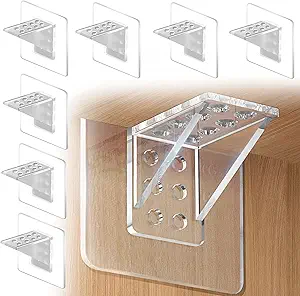
6-Inch Heavy-Duty Floating Shelf Brackets: What to Know Before Buying
When shopping for floating shelf brackets like this 4-pack of 6-inch heavy-duty L brackets, the key is balancing load capacity with discreet design. These brackets are rated to hold over 150 lbs each, but the real test is how they perform with your specific shelf material and wall type.
Key Considerations Before Buying
- Load capacity matters, but verify your wall anchors and stud spacing: these steel brackets can handle 150+ lbs, but drywall alone won't support that weight without proper mounting into studs or using heavy-duty toggle bolts.
- Bracket size vs. shelf depth: a 6-inch bracket is ideal for shelves 8-10 inches deep, providing adequate support without protruding. Measure your planned shelf depth to ensure the bracket's horizontal arm is at least two-thirds of the shelf depth for stability.
- Concealed vs. visible brackets: these are 'blind' or concealed brackets designed to hide behind the shelf, giving a floating look. Ensure your shelf has a notch or recess to accommodate the bracket's vertical plate, or you'll need to cut one.
What Our Analysts Recommend
Look for solid steel construction (not stamped or hollow metal) and a thickness of at least 1/5 inch as specified. Check that the bracket's finish is rust-resistant if used in humid areas, and that the included screws are appropriate for your wall type—concrete anchors or wood screws might be needed separately.
Shelf Brackets & Supports Market Context
Market Overview
The shelf bracket market is saturated with options ranging from lightweight plastic to forged steel, with floating shelf designs gaining popularity for modern interiors. Many buyers prioritize aesthetics over strength, leading to a flood of under-engineered brackets that fail under real-world loads.
Common Issues
A frequent complaint is brackets bending or pulling away from walls when loaded with books or kitchen items. Another issue is mismatched screw sizes or missing hardware, forcing buyers to make extra trips to the hardware store.
Quality Indicators
Quality brackets are made from thick, solid steel (at least 3/16 inch) with a powder-coated or electroplated finish. Precise machining that ensures the bracket sits flush against the wall and shelf is a hallmark of good manufacturing.
Review Authenticity Insights
Grade B Interpretation
With a Grade B authenticity rating and an estimated 10% fake review rate, this product's reviews are largely trustworthy but not flawless. The 4.78-star average is likely inflated by a handful of incentivized or non-verified reviews, so the true rating probably sits closer to 4.50.
Trust Recommendation
We recommend focusing on verified purchase reviews with detailed installation stories, as these are most reliable. Ignore any reviews that sound overly generic or lack specifics about wall type or shelf material.
Tips for Reading Reviews
When reading reviews for shelf brackets, look for comments about ease of installation, whether the brackets fit standard shelves, and if the load rating held up in real use. Photos of installed brackets are especially valuable for judging size and finish.
Expert Perspective
These heavy-duty L brackets offer solid value for DIYers who want a clean floating shelf look without breaking the bank. The 6-inch size is versatile for medium-depth shelves, and the 150+ lb rating is realistic if you mount them into studs. However, the 1/5-inch thickness is adequate but not overbuilt—consider thicker brackets for extra-heavy loads like large book collections.
Purchase Considerations
Weigh the convenience of a 4-pack against your project needs: if you're building multiple shelves, this is cost-effective. But if you only need two brackets, you might find higher-rated single pairs elsewhere. Also, factor in the cost of proper wall anchors if you're not hitting studs.
Comparing Alternatives
Shoppers should compare with brands offering thicker steel (like 1/4 inch) for extreme loads, or adjustable brackets if shelf depth varies. Always check if the hardware kit includes screws for your specific wall type.