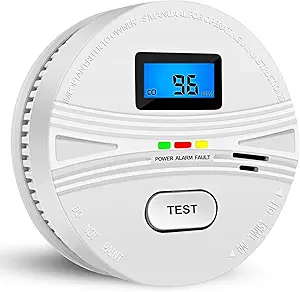
![5IN1 Plug in Carbon Monoxide Detector &Smoke & Combustible Natural Gas Alarm Combination 200OmAh Builti-in Backup Battery HD Screen [Smoke CO Gas Temp Humidity Sensor] for Home Indoor](https://m.media-amazon.com/images/I/71c9A5mmNoL._AC_SL1200_.jpg)
Multi-Sensor Safety Devices: What to Know Before Buying a 5-in-1 Alarm
This 5-in-1 plug-in detector combines smoke, carbon monoxide, combustible gas, temperature, and humidity sensing—a significant integration for home safety. Buyers should understand that while convenient, multi-sensor devices require careful evaluation of sensor accuracy, backup battery reliability, and screen readability to ensure they perform as critical safety tools.
Key Considerations Before Buying
- Sensor integration: Verify that independent sensors for smoke, CO, and gas don't interfere with each other's detection algorithms, as some combination units can have delayed responses.
- Backup battery performance: The 2000mAh built-in battery must provide sufficient runtime during power outages; check real-world reports of how long it sustains all five functions.
- Screen utility: The HD screen displaying multiple metrics (temp, humidity) should enhance situational awareness without becoming a distraction or compromising the primary alarm function.
What Our Analysts Recommend
Quality indicators include clear differentiation between alarm types (distinct sounds for smoke vs. CO), a loud decibel rating (typically 85dB+), and certifications like CSA or UL for the Canadian market. The plug design should be low-profile to not block adjacent outlets.
Carbon Monoxide Detectors Market Context
Market Overview
The Canadian market for combination detectors is growing, with consumers seeking space-saving solutions that meet building code requirements for both smoke and CO detection. Products with added environmental sensors (gas, humidity) represent a premium segment aiming to provide comprehensive home monitoring.
Common Issues
Common problems include nuisance false alarms from overly sensitive gas sensors, screens that are difficult to read in direct light, and backup batteries that fail to charge properly or deplete quickly when power is cut. Some units also have confusing voice alerts that don't clearly state the hazard.
Quality Indicators
Look for units with end-of-life warnings (typically 7-10 years), test/silence buttons that are easily accessible, and a design that allows for sensor testing without requiring a ladder. Quality products will specify sensor types (e.g., electrochemical for CO, photoelectric for smoke).
Review Authenticity Insights
Grade B Interpretation
A Grade B with an 11% estimated fake review rate suggests generally reliable feedback, but shoppers should be slightly cautious of overly enthusiastic 5-star reviews. The adjusted rating of 4.60/5 (down from 4.89) indicates the genuine satisfaction is still strong, but not as perfect as the raw average implies.
Trust Recommendation
Focus on verified purchase reviews that mention long-term use (6+ months) and specific scenarios like power outages or low battery performance. Be skeptical of reviews that only praise packaging or delivery speed without discussing actual device performance.
Tips for Reading Reviews
Pay particular attention to reviews discussing the HD screen's clarity in different lighting, the distinctiveness of the three alarm sounds, and how the unit performs during actual power loss tests. Canadian reviewers mentioning cold weather performance are especially valuable.
Expert Perspective
This product's high adjusted rating (4.60/5) and strong authenticity grade indicate it's likely a competent multi-sensor device that satisfies most users. The integration of five sensors into one plug-in unit is its main value proposition, appealing to homeowners wanting comprehensive monitoring without multiple devices. The 2000mAh backup battery is a notable feature, but its real-world endurance under full sensor load requires verification from long-term reviews.
Purchase Considerations
Weigh the convenience of a single device against the potential risk of a single point of failure for multiple safety functions. Consider your home's specific needs—if you have natural gas appliances, the combustible gas sensor adds value; if not, you might prioritize a simpler smoke/CO combination. Ensure your electrical outlets are in optimal locations for effective smoke detection (often ceiling-mounted is preferred).
Comparing Alternatives
Shoppers should compare this 5-in-1 unit against dedicated smoke/CO combos and standalone gas detectors to assess whether integrated functionality outweighs potential compromises in individual sensor performance.