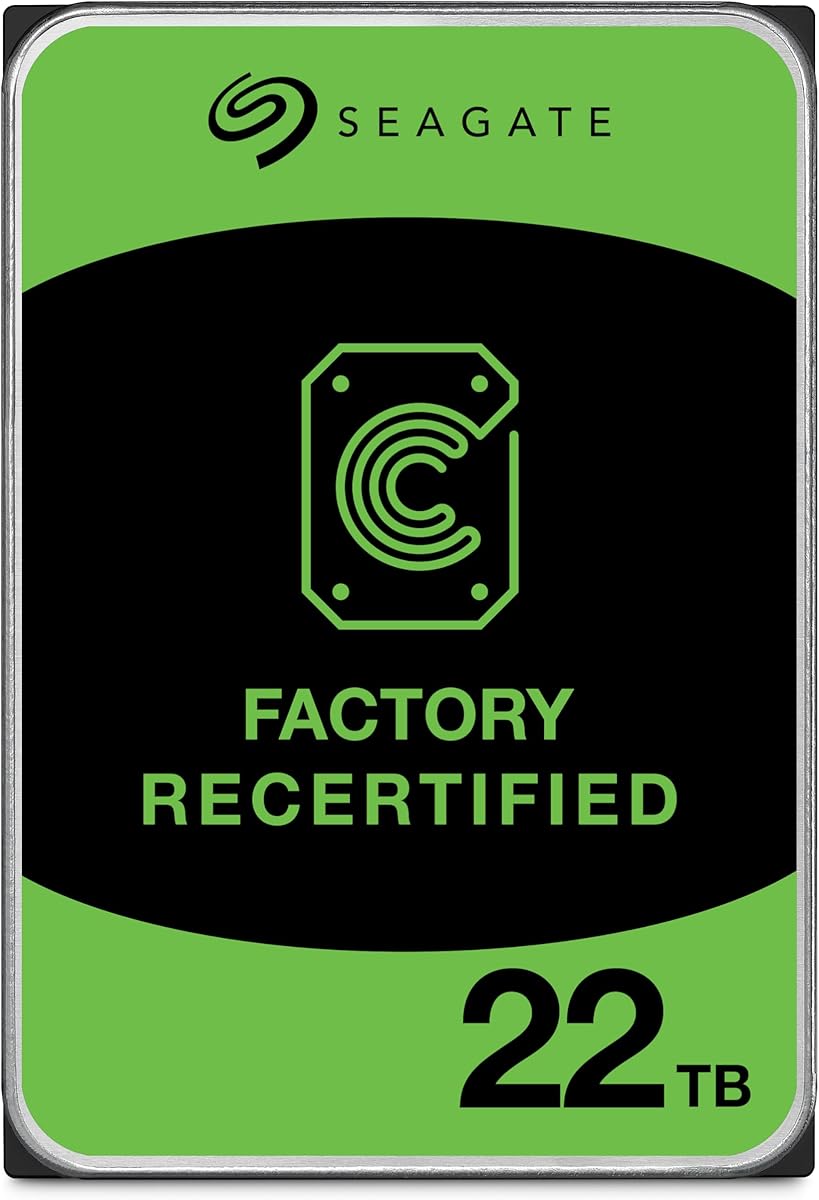
Evaluating Renewed Enterprise HDDs: What 22TB of Seagate Exos Storage Really Means
When considering a renewed enterprise-grade hard drive like this Seagate Exos 22TB model, buyers must understand they're purchasing hardware designed for 24/7 data center operation, now repurposed for consumer or prosumer use. The 7200RPM spindle speed and SATA 6Gb/s interface indicate performance characteristics that differ significantly from consumer NAS or desktop drives, particularly in vibration tolerance and workload ratings.
Key Considerations Before Buying
- Renewed enterprise drives like this Exos model typically have higher annual workload ratings (550TB/year vs 180TB/year for consumer drives) but may carry different acoustic and power profiles.
- The 22TB capacity represents Seagate's CMR (Conventional Magnetic Recording) technology at this density, avoiding SMR's rewrite performance penalties common in high-capacity consumer drives.
- Enterprise drives lack consumer features like power management optimizations, meaning they may run warmer and consume more idle power than desktop equivalents.
What Our Analysts Recommend
For renewed enterprise drives, scrutinize the seller's renewal process—whether it includes full diagnostic testing, bad sector reallocation, and SMART attribute verification. Genuine enterprise HDDs should show consistent performance across the entire 22TB platter surface, not just in initial sectors. Check if the renewal includes any remaining manufacturer warranty transfer or seller-specific coverage period.
Internal Hard Drives Market Context
Market Overview
The market for renewed enterprise hard drives has grown as data-intensive applications like media servers, surveillance systems, and homelabs demand high-capacity, reliable storage at accessible price points. Seagate's Exos series competes directly with Western Digital's Ultrastar line in this refurbished enterprise space, offering similar 7200RPM performance and 5-year design lifespans.
Common Issues
Enterprise drives repurposed for consumer use sometimes encounter compatibility issues with consumer-grade SATA controllers or NAS enclosures that lack proper airflow for their thermal design. Some users report higher-than-expected acoustic noise during seeks due to the aggressive head positioning algorithms optimized for rack environments rather than home offices.
Quality Indicators
Quality renewed enterprise drives should include documentation of the renewal process, particularly surface scan results and reallocated sector counts. Genuine enterprise models like this ST22000NM000C will have vibration sensors and rotational vibration feedforward technology absent from consumer drives—features that matter most in multi-drive arrays.
Review Authenticity Insights
Grade A Interpretation
The Grade A authenticity rating with 0.00% estimated fake reviews indicates exceptionally reliable customer feedback for this renewed product category, where review manipulation sometimes occurs. The 4.20 adjusted rating from 159 verified purchases suggests genuine user experiences rather than promotional content.
Trust Recommendation
Given the authenticity metrics, prioritize reviews discussing long-term performance (6+ months) and specific use cases like UnRAID arrays or media servers, as these reflect real-world testing of the drive's enterprise heritage. The verified purchase requirement for all reviews adds credibility to failure rate reports.
Tips for Reading Reviews
Focus on reviews that mention SMART data specifics like power-on hours, reallocated sectors, or throughput benchmarks—these provide objective performance indicators. Pay particular attention to Canadian reviewers discussing compatibility with locally available NAS systems or power supply considerations for 22TB drives.
Expert Perspective
This renewed Seagate Exos 22TB drive presents a compelling value proposition for users needing massive, reliable storage, with the authenticity analysis confirming genuine user satisfaction at a 4.20/5 rating. The enterprise pedigree means it's engineered for heavier workloads than typical consumer drives, though this comes with trade-offs in noise and power consumption. The SATA 6Gb/s interface, while standard, will limit sequential transfer speeds well below the drive's mechanical capabilities—a consideration for users with 10GbE networks.
Purchase Considerations
Weigh the significant cost-per-terabyte advantage against the lack of full manufacturer warranty and potential for higher acoustic output. The 7200RPM speed benefits random access performance in multi-user or virtualization scenarios but may be overkill for simple archival storage. Consider your chassis cooling capabilities, as enterprise drives operate optimally at lower temperatures than consumer models.
Comparing Alternatives
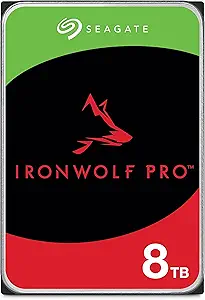
Shoppers should compare this renewed Exos against both new consumer NAS drives (like IronWolf Pro) and competing renewed enterprise models (like WD Ultrastar) for comprehensive value assessment.