Choosing an Upper Arm Blood Pressure Monitor You Can Trust
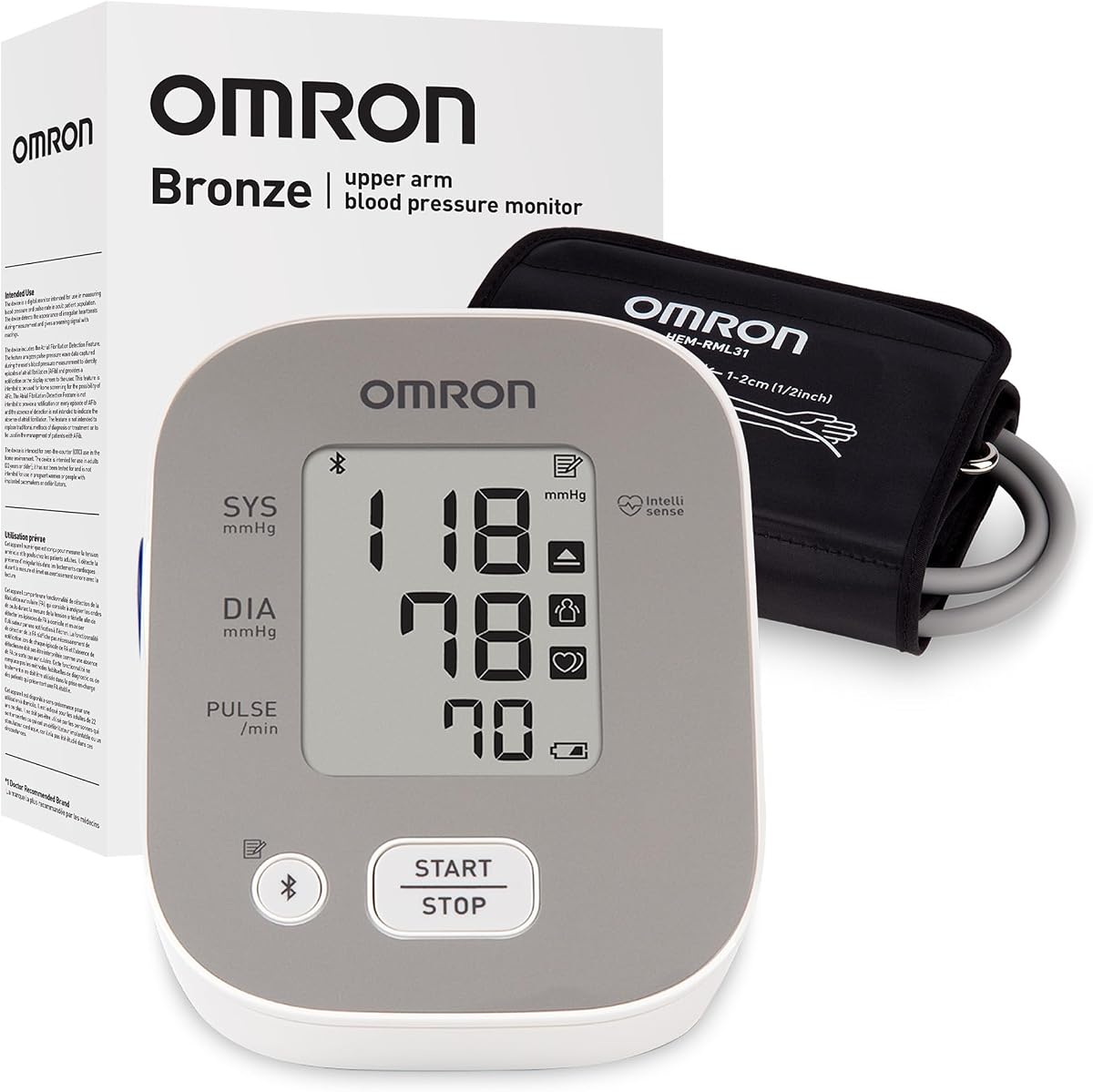
The OMRON Bronze is a validated upper arm blood pressure monitor from a brand that dominates the Canadian home-monitoring market. Unlike wrist cuffs, the upper arm design captures readings closer to the brachial artery, which is why it's the format most clinicians recommend for home use. Before buying any monitor, though, it pays to understand what separates a reliable device from a convenient-looking one.
Key Considerations Before Buying
- Cuff fit is the single biggest factor in reading accuracy: the OMRON Bronze ships with a standard adult cuff sized for upper-arm circumferences of roughly 22–42 cm, so measure your arm before ordering. If you fall outside that range, you'll need a separate large or small cuff, and a poorly fitted cuff can skew systolic readings by 10 mmHg or more.
- Look for clinical validation and a memory function. The Bronze is backed by OMRON's validation pedigree, and its single-user memory stores past readings so you can spot trends rather than reacting to one outlier measurement. A monitor without memory forces you to log numbers manually, which most people abandon within weeks.
- Consider your routine and dexterity. The Bronze is a one-touch, battery-operated unit with an irregular heartbeat indicator—simple enough for daily use, but it lacks the Bluetooth syncing and multi-user profiles found on pricier OMRON models. If you're tracking readings for two people or want app-based logs, this model will feel limiting.
What Our Analysts Recommend
Prioritize devices with published clinical validation, a correctly sized cuff included in the box, and clear error indicators for movement or cuff problems. A trustworthy monitor also displays readings in large, legible digits and stores enough historical readings to show a trend. Avoid no-name units that omit validation data—accuracy is the entire point of the purchase.
Blood Pressure Market Context
Market Overview
Home blood pressure monitors have shifted from niche medical devices to everyday wellness tools, and the Canadian market is crowded with both established medical brands and budget imports. OMRON is the category leader in Canada, which is reflected in the Bronze's extraordinary review volume—over 10,000 ratings and a 4.89 average. That saturation also means shoppers face a confusing mix of wrist, upper arm, and smart-connected models at wildly different price points.
Common Issues
The most frequent complaint in this category isn't device failure—it's user error: wrong cuff size, measuring after coffee or exercise, or an arm position that's too high or low. Battery life and cuff durability are secondary concerns, and some budget monitors produce inconsistent readings that erode trust. Because blood pressure varies naturally throughout the day, inconsistent technique is often mistaken for a faulty device.
Quality Indicators
Clinical validation from a recognized body, a brand with a long track record in medical devices, and a cuff that fits your arm properly are the strongest quality signals. Read the spec sheet for cuff circumference range and memory capacity rather than relying on marketing language. A monitor that flags irregular heartbeats and errors caused by movement is also a sign of thoughtful engineering.
Review Authenticity Insights
Grade B Interpretation
A Grade B with an estimated 10% fake review rate is solid for a high-volume Amazon listing—it means roughly nine in ten reviews appear genuine, with a small cluster of suspicious entries likely inflating the score. The adjusted rating of 4.60/5 (down from 4.89) is still strong and more believable for a medical device, where a perfect score would be unusual. In practice, the authenticity data suggests the positive consensus is real, not manufactured.
Trust Recommendation
Treat the 4.60 adjusted rating as your working number and read a sample of three- and four-star reviews, which tend to describe real limitations like cuff comfort or missing Bluetooth. The volume of specific, detailed reviews is itself reassuring—fake reviews are usually short and vague. Cross-check any claim about accuracy against the product's validation documentation rather than review counts alone.
Tips for Reading Reviews
For blood pressure monitors, prioritize reviews that mention the reviewer's arm size, how readings compared to a doctor's office measurement, and how long the device lasted. Skip reviews that only praise delivery speed or packaging. Look for patterns—if multiple reviewers mention the same cuff-fit issue, that's a signal worth heeding regardless of the star rating.
Expert Perspective
The OMRON Bronze is a sensible entry point into home blood pressure monitoring: it's from the most established brand in the category, uses the clinically preferred upper arm method, and has a large base of apparently genuine positive reviews. Its limitations—no Bluetooth, single-user memory, basic feature set—are the trade-offs that keep it affordable. For someone who wants a dependable daily reading without app complexity, it's a credible choice; for data-tracking households, it may feel dated.
Purchase Considerations
Weigh your arm circumference against the included cuff range first, then decide whether you need connectivity or multi-user support. If your doctor has asked you to log readings over time, the lack of Bluetooth means manual record-keeping, which is a real commitment. Also confirm the warranty terms and whether replacement cuffs are readily available in Canada.
Comparing Alternatives
Compare the Bronze against OMRON's own connected models and validated competitors like A&D Medical before deciding—the feature gap between tiers is often smaller than the price difference suggests.