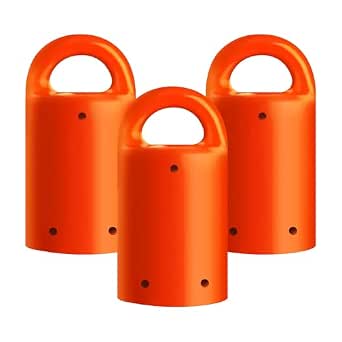
Magnetic Stud Finders: What to Know Before You Buy
Magnetic stud finders like the 52300 Studball use powerful magnets to latch onto drywall screws or nails, eliminating batteries and calibration hassles. With 27 pounds of pull power, this model is designed to detect fasteners through common wall materials such as 5/8-inch drywall, 3/4-inch plywood, and ceramic tile.
Key Considerations Before Buying
- Magnetic stud finders only work if the wall was fastened with metal screws or nails; they won't detect wood studs behind adhesive-only or non-magnetic assemblies, so confirm your wall construction first.
- Pull power matters: a stronger magnet (like 27 lb) stays attached to the fastener and gives a clearer signal, but it can also snap to nearby metal lath, conduit, or corner beads, so sweep slowly and verify with a second pass.
- Thickness ratings are critical—this unit is rated for up to 5/8-inch drywall, 3/4-inch plywood, and ceramic tile, but performance drops on thicker plaster or double-layer drywall, so check your wall depth before relying on it.
What Our Analysts Recommend
Look for a magnet with a rated pull force and an explicit maximum wall thickness, since these are the two specs that determine real-world reliability. A compact, low-profile housing helps it slide under tile edges and into tight corners, and a strong, durable magnet that doesn't lose strength over time is more important than extra features.
Stud Finders Market Context
Market Overview
Stud finders range from basic magnetic models to electronic scanners with deep-scan modes and AC detection, and magnetic units remain popular for their simplicity and zero battery dependence. The market increasingly favors multi-sensor electronic finders, but magnetic tools still hold a loyal following among tradespeople who value speed and predictability.
Common Issues
A frequent complaint with magnetic stud finders is false positives from metal lath, corner bead, or pipes, which can mislead users into drilling in the wrong spot. Electronic stud finders, meanwhile, often suffer from calibration errors on textured walls or require constant recalibration, which is why many users switch to magnets.
Quality Indicators
Quality magnetic stud finders use neodymium magnets with a stated pull force, a smooth housing that won't scratch walls, and clear instructions for verifying fastener locations. A strong magnet that holds itself in place while you mark the spot is a practical sign of good design.
Review Authenticity Insights
Grade A Interpretation
An A authenticity grade with an estimated 5% fake review rate means the 5.00/5 rating is largely trustworthy, and the adjusted 4.90/5 still reflects strong real-world satisfaction. The detailed, context-rich reviews describing specific wall types and use cases further support that these are genuine user experiences.
Trust Recommendation
You can treat the rating as a reliable signal, but still skim reviews for mentions of your specific wall material—drywall, tile, or plywood—since magnetic performance varies by construction. Look for reviewers who describe verification steps, as those accounts tend to be the most credible.
Tips for Reading Reviews
For magnetic stud finders, prioritize reviews that mention the wall thickness and material they tested, plus whether the magnet stayed attached to the fastener. Be skeptical of reviews that only praise the magnet's strength without describing how they confirmed stud location.
Expert Perspective
The 52300 Studball stands out for its high pull power and no-battery operation, and the near-perfect adjusted rating suggests it performs as advertised for common drywall and plywood applications. Its 5/8-inch drywall and 3/4-inch plywood ratings cover most residential walls, though users with thick plaster or double-layer drywall should temper expectations. The strong authenticity profile means the positive consensus is worth taking seriously.
Purchase Considerations
Weigh whether your walls contain metal fasteners and whether you need to detect through tile or plywood—if so, this magnetic finder is a sensible, low-maintenance choice. If you frequently work on walls with metal lath or need AC wire detection, an electronic scanner may be a better fit.
Comparing Alternatives
Compare with other magnetic stud finders that specify pull force and wall thickness, and consider electronic models if you need deeper scanning or live wire alerts.