
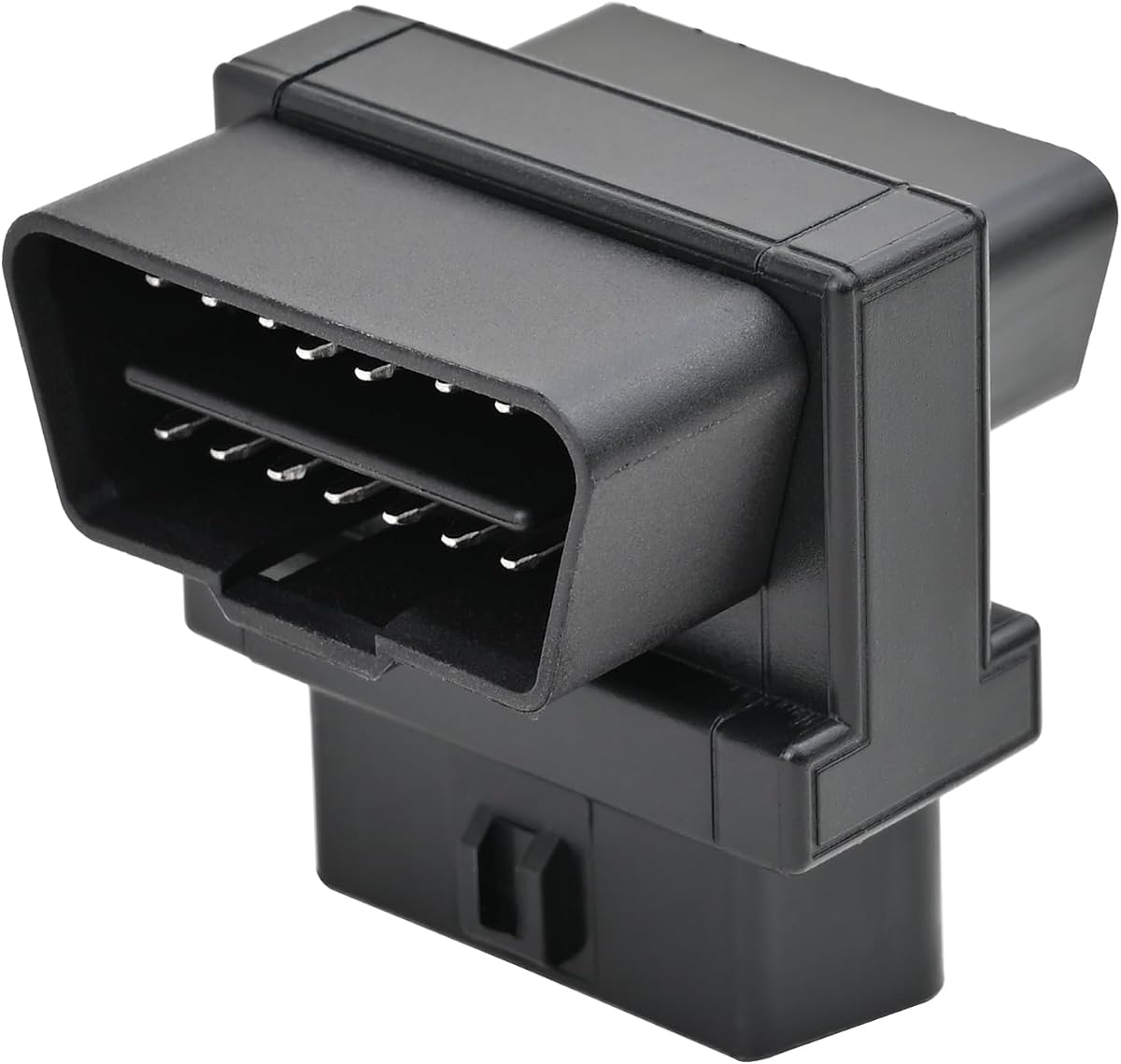
Choosing a 16-Pin OBD-II Splitter: Fit, Clearance, and Signal Integrity
An OBD-II splitter like the iKKEGOL Pocket OBD2 Splitter Cable lets you keep a permanent device—dash cam, AFM/DFM disabler, or transmission temp monitor—plugged into the port while still connecting a scan tool. The key is that this specific model is marketed as 'Top Widest,' meaning the male connector housing is sized to clear tight port recesses where slimmer splitters can't fully seat.
Key Considerations Before Buying
- Physical clearance at the port: Many vehicles recess the OBD-II connector under the dash, and a splitter with a wide or bulky male housing may not fully insert. The 'Top Widest' design here is intended to address that, but you should still check the depth and angle of your port before buying.
- Pin-to-pin continuity: A splitter is a passive pass-through, so all 16 pins must connect cleanly. Any misalignment or poor solder joint can cause intermittent communication errors with scan tools or permanently installed devices, so look for full 16-pin coverage and firm insertion feel.
- Cable strain and routing: Because two devices now hang off one port, the splitter's cable length and flexibility matter. A short, stiff T-split can put stress on the vehicle's OBD-II socket, while a longer, flexible lead lets you route devices out of knee range.
What Our Analysts Recommend
Look for a splitter that explicitly states full 16-pin pass-through rather than a partial pin set, since some cheap splitters only wire a few pins for power and ground. Also check that the connector housings are molded tightly and the cable jacket resists abrasion, because this part stays plugged in and is exposed to heat, vibration, and footwell traffic.
Code Readers & Scan Tools Market Context
Market Overview
OBD-II splitters are a small but growing accessory niche driven by the rise of always-on devices like dash cams, AFM/DFM disablers, and telematics dongles that occupy the diagnostic port. Most units are simple passive Y-cables, so the market competes mainly on connector fit, build quality, and price rather than electronics.
Common Issues
The most frequent complaint with OBD-II splitters is poor fit—connectors that are too thick to seat in recessed ports or too loose and cause intermittent connections. Another common issue is that the splitter blocks the port for a scan tool when a device is already plugged in, which defeats the purpose of a T-split if the geometry is wrong.
Quality Indicators
Quality splitters use full 16-pin pass-through wiring, molded strain relief at both ends, and connector housings that match OEM dimensions. Reviews that mention successful use with specific devices—like dash cams or transmission temp monitors—are stronger signals than generic 'works great' comments.
Review Authenticity Insights
Grade A Interpretation
With a Grade A authenticity rating and an estimated 8% fake review rate, this product's review profile is unusually clean for the category. The adjusted rating of 4.50/5 (down from 4.67/5) suggests that even after removing suspicious reviews, the product still holds strong approval, which is a good sign for a low-cost accessory.
Trust Recommendation
You can treat the review consensus as broadly reliable, but focus on reviews that describe specific vehicles and connected devices rather than star ratings alone. If you drive a model with a deeply recessed OBD-II port, look for reviewers who mention fit in similar vehicles before committing.
Tips for Reading Reviews
When reading reviews for OBD-II splitters, prioritize those that name the exact device they connected and whether it stayed connected over time. Pay attention to comments about fit and pin alignment, since those are the failure points that matter most for a passive splitter.
Expert Perspective
The iKKEGOL Pocket OBD2 Splitter Cable appears to be a solid, straightforward solution for drivers who need to run two devices from one OBD-II port. Its 'Top Widest' connector design targets a real pain point—recessed ports that reject thicker splitters—and the 4.50/5 adjusted rating with Grade A authenticity suggests buyers are generally satisfied. The 8% estimated fake review rate is low enough that the overall sentiment is trustworthy, though as with any passive splitter, your experience will depend heavily on your vehicle's port geometry.
Purchase Considerations
Before buying, confirm that your OBD-II port has enough clearance for the splitter's male housing and that the combined length of your two devices won't interfere with driving. Also consider whether you need a splitter at all—if you only occasionally use a scan tool, a simple extension cable may be cheaper and less bulky.
Comparing Alternatives
Shoppers should compare this splitter with other 16-pin OBD-II splitters that offer different cable lengths, right-angle connectors, or swivel heads, as port fit varies widely across vehicle models.


