
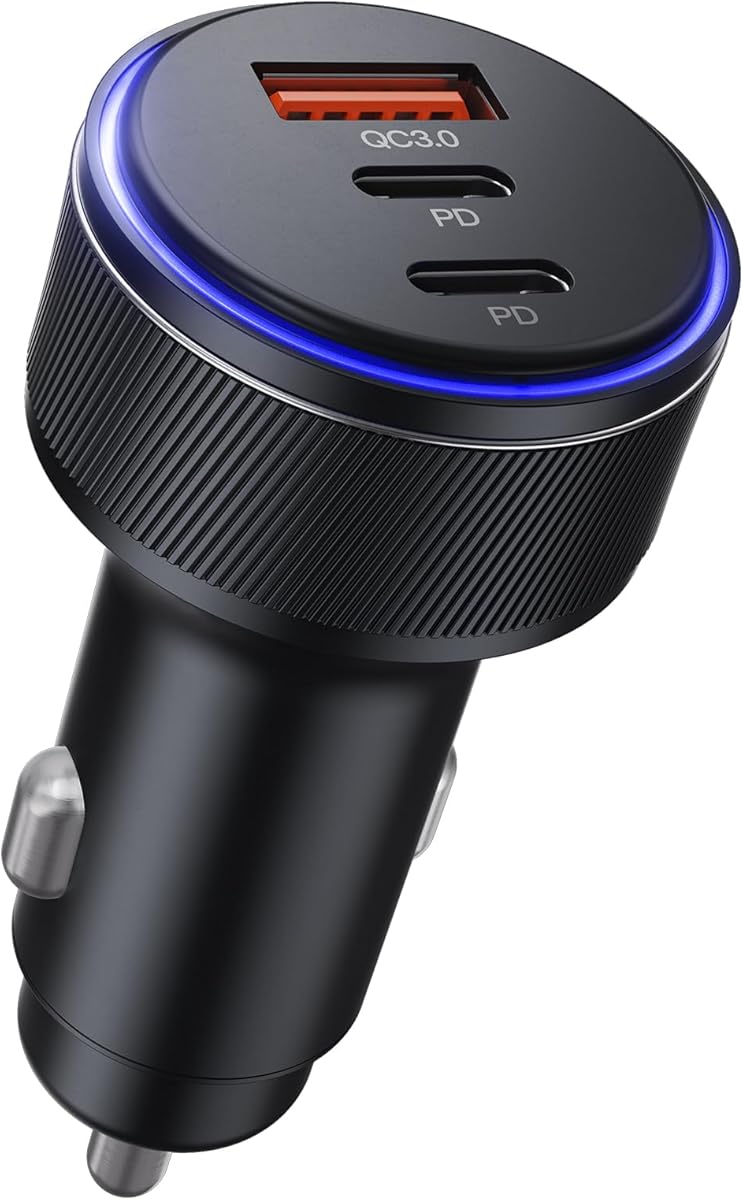
What to Know Before Buying a 90W Multi-Port Car Charger
A 90W three-port car charger like this one promises to power a MacBook, iPad, and iPhone simultaneously from your 12V socket. But the 3.30 adjusted rating suggests real-world performance often falls short of the headline wattage, so understanding how these chargers actually distribute power is essential before you buy.
Key Considerations Before Buying
- Total wattage is shared, not per-port: a 90W rating usually means the combined output across all three ports, and plugging in multiple devices can drop each port to slow-charging speeds. Check the per-port PD3.0 and QC3.0 specs to see what a single laptop or phone gets when others are connected.
- Fit and retention in the socket matter more than you'd think: several reviewers cite installation challenges and loose connections, which cause intermittent charging on bumpy roads. Look for chargers with a snug barrel design and a low-profile head that won't block adjacent console controls.
- Protocol compatibility drives real charging speed: PD3.0 is needed for fast iPhone and MacBook charging, while QC3.0 serves many Android devices. Confirm the charger negotiates the right protocol for your specific phone or laptop, since a mismatched port can cap you at standard 5W speeds.
What Our Analysts Recommend
Prioritize chargers that publish a clear port-by-port power table rather than a single combined number, and favor metal or reinforced barrels over all-plastic housings that loosen over time. Built-in safeguards—overcurrent, overheat, and short-circuit protection—are also worth verifying, since cheap 12V adapters are prone to heat buildup during long drives.
Automobile Chargers Market Context
Market Overview
The car charger market is flooded with budget multi-port adapters that advertise high wattage but vary widely in actual output and durability. USB-C PD has become the standard for fast charging phones and laptops, pushing manufacturers to cram more ports and higher ratings into compact 12V plugs.
Common Issues
The most frequent complaints in this category are chargers that loosen in the socket, overheat during extended use, or fail to deliver advertised speeds when multiple devices are plugged in. Some units also interfere with FM radio or produce coil whine, and cheap models may lack proper certification for Canadian electrical safety standards.
Quality Indicators
A trustworthy car charger lists individual port outputs, names its safety certifications (such as CSA, UL, or ETL), and uses metal contacts that grip the socket firmly. Brands that publish firmware or chipset details for PD negotiation tend to deliver more consistent fast charging than anonymous white-label units.
Review Authenticity Insights
Grade B Interpretation
A Grade B authenticity score with roughly 15% estimated fake reviews means most feedback on this charger is genuine, but a meaningful minority may be inflated. The 3.56 star average dropping to 3.30 after adjustment tells you real buyers are noticeably less satisfied than the headline rating suggests.
Trust Recommendation
Treat the adjusted 3.30 rating as the truer signal and weight detailed critical reviews more heavily than short five-star praise. Since all reviews are verified purchases, focus on reviewers who describe specific scenarios—like charging a MacBook while navigating—rather than generic 'works great' comments.
Tips for Reading Reviews
Sort by critical reviews first and look for recurring themes such as socket fit, heat, or multi-device slowdowns, since patterns across many reviewers are more reliable than any single review. Pay attention to reviews mentioning specific devices and charging speeds, as these reveal whether the 90W claim holds up in practice.
Expert Perspective
This three-port 90W charger targets buyers who want one adapter for a phone, tablet, and laptop on the road, and on paper the PD3.0 and QC3.0 combination covers most modern devices. However, the gap between its 3.56 headline rating and 3.30 adjusted score, combined with recurring mentions of installation and performance issues, suggests the execution doesn't fully match the spec sheet. It's a reasonable budget option for light multi-device charging, but demanding users may find the shared wattage limiting.
Purchase Considerations
Weigh how many devices you'll charge simultaneously and whether any of them is a laptop that needs sustained 45W or more—if so, a single high-wattage PD port may serve you better than three shared ports. Also consider your vehicle's socket depth and whether a low-profile, firmly seated design matters for your daily driving.
Comparing Alternatives
Compare this unit against established-brand car chargers with published per-port outputs and safety certifications, as the price difference is often small relative to the reliability gained.


