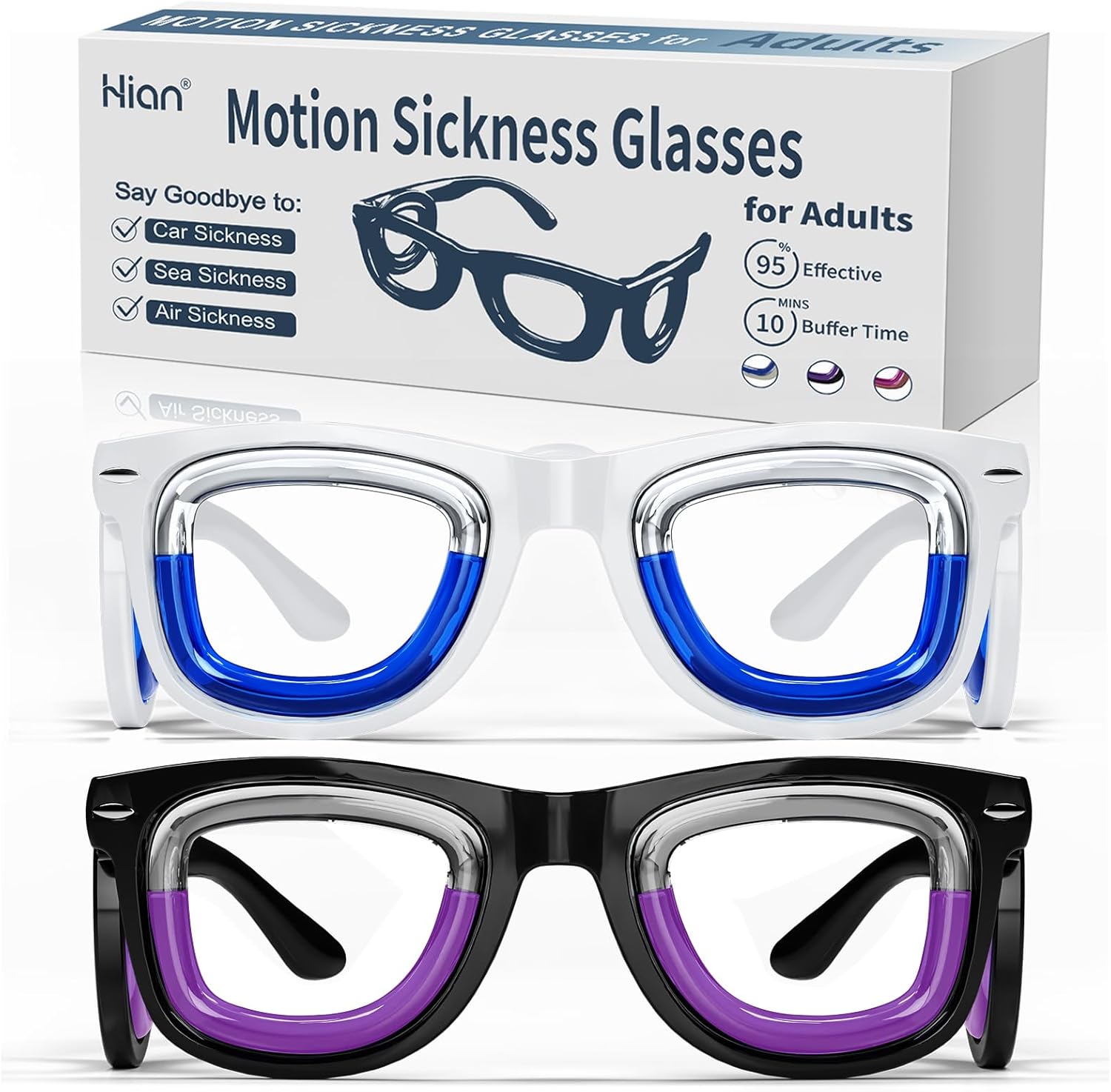
Evaluating Motion Sickness Glasses: How These Ultra-Light Smart Glasses Perform
These anti-motion sickness glasses represent a non-pharmaceutical approach to nausea relief, using fluid-filled rims to create an artificial horizon. Unlike traditional medications, they're designed for travel, gaming, and situations where drowsiness isn't acceptable. The 'ultra-light portable' claim is central to their value proposition for active users.
Key Considerations Before Buying
- The fluid-filled rim technology requires proper calibration to your eye level—incorrect positioning significantly reduces effectiveness according to user reports.
- These glasses work best for mild to moderate motion sickness; severe sufferers may need supplemental medication despite the 4-star average rating.
- The 'smart glasses' designation refers to the optical technology, not electronic features—manage expectations about their purely mechanical operation.
What Our Analysts Recommend
Quality indicators include secure fluid seals (no leaks reported in authentic reviews), adjustable nose pads for proper horizon alignment, and durable hinges that withstand travel. The 3.80 adjusted rating suggests examining 3-star reviews for balanced performance insights.
Motion Sickness & Nausea Market Context
Market Overview
The motion sickness glasses market has expanded beyond basic fluid-filled models to include electronic variants, though this product represents the mechanical approach. Canadian consumers increasingly seek drug-free alternatives, particularly for children and sensitive travelers who can't tolerate traditional medications.
Common Issues
Users frequently report incorrect usage—wearing glasses after symptoms begin rather than preventively—which diminishes effectiveness. Fit problems plague universal sizing, and some expect immediate relief rather than the 5-10 minute adjustment period these glasses typically require.
Quality Indicators
Authentic reviews mention clear, distortion-free lenses and smooth fluid movement within the rims. The 11% estimated fake reviews suggest focusing on verified purchases with specific usage scenarios rather than generic praise.
Review Authenticity Insights
Grade B Interpretation
A Grade B authenticity rating with 11% estimated fake reviews indicates generally reliable feedback, though approximately 1 in 9 reviews may be artificially positive. The 0.20-point drop from the displayed 4.00 to adjusted 3.80 rating reflects this inflation.
Trust Recommendation
Prioritize reviews mentioning specific use cases like 'car rides on winding roads' or 'VR gaming sessions' over vague claims. The 1,261-review sample provides sufficient authentic data—focus on the middle ratings (3-4 stars) for balanced perspectives.
Tips for Reading Reviews
Look for reviews discussing fit adjustments, time-to-relief measurements, and comparison to previous solutions like Dramamine. Authentic users typically mention family members' experiences or specific travel scenarios rather than general praise.
Expert Perspective
These glasses represent a legitimate non-pharmacological option with demonstrated effectiveness for many users, evidenced by the 3.80 adjusted rating from genuine reviews. Their value lies in situations where medication side effects are problematic—long flights, morning commutes, or gaming sessions. However, the effectiveness varies significantly based on individual physiology and proper usage technique, explaining the rating distribution from 1 to 5 stars.
Purchase Considerations
Consider your specific motion sickness triggers—these glasses work best for visual-vestibular mismatch situations like reading in cars. Factor in the learning curve for proper positioning and the social aspect of wearing distinctive glasses in public settings.
Comparing Alternatives
Compare with acupressure bands, ginger supplements, and electronic motion sickness devices to determine which solution matches your sensitivity level and lifestyle.