What to Know Before Buying a 6-Inch Digital Caliper for Home and DIY
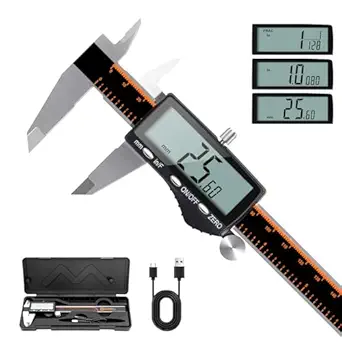
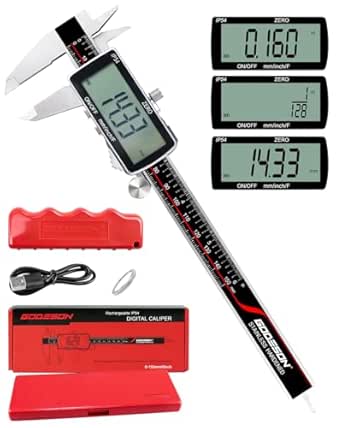
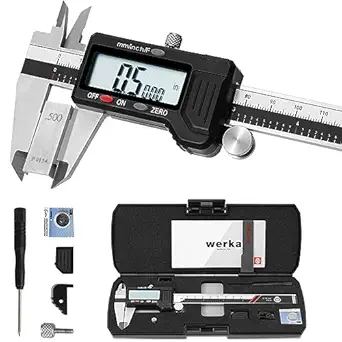
A 6-inch digital caliper like this one is the go-to measuring tool for hobbyists and homeowners who need reliable inch/millimeter readings without spending machinist-level money. This model pairs a large LCD screen with auto-off and unit conversion, and ships in a protective plastic case—features that matter most for occasional, varied household use.
Key Considerations Before Buying
- Resolution and accuracy: Most budget digital calipers claim 0.01mm/0.0005" resolution, but real-world accuracy depends on jaw quality and consistent zeroing. For DIY tasks like checking drill bits or lumber thickness, this is usually adequate; for precision machining, look for tighter tolerances.
- Battery and auto-off behavior: The auto-off feature prevents drained batteries, but some units reset to zero or default units after shutting down. Confirm whether the caliper retains its last measurement mode or requires re-zeroing each session.
- Build material and jaw play: Plastic-bodied calipers are lighter and cheaper but can flex under pressure, while stainless steel resists wear. Check reviews for mentions of jaw wobble or inconsistent readings along the beam, which signal loose fit.
What Our Analysts Recommend
Look for a clear, large LCD that's readable at arm's length, smooth thumb-roller movement without gritty spots, and a zero button that responds instantly. A included plastic case is a practical plus for protecting the jaws and screen between projects, and unit conversion should toggle cleanly between inches and millimeters without losing the zero point.
Digital Calipers Market Context
Market Overview
The digital caliper market is flooded with sub-$30 options, many built on similar Chinese OEM platforms and rebranded under dozens of names. At the 6-inch size, competition centers on screen size, battery life, and whether the body is plastic or stainless steel—so spec sheets alone rarely separate winners from duds.
Common Issues
Frequent complaints in this category include calipers that won't hold zero after the jaws are opened and closed, dead-on-arrival batteries, and displays that dim or flicker. Plastic calipers can also develop flex at the beam, causing readings to drift when measuring round or irregular objects.
Quality Indicators
Reliable units typically have a snug, low-friction thumb roller, jaws that meet flush with no visible gap when closed, and a display that stays legible in normal indoor light. Reviews that mention repeatable measurements over months of use are a stronger quality signal than unboxing impressions.
Review Authenticity Insights
Grade A Interpretation
A Grade A authenticity rating with an estimated 5% fake review rate is about as clean as it gets for a budget measuring tool on Amazon. The 4.80 overall rating dropping only to 4.70 after adjustment suggests the score isn't propped up by a cluster of suspicious five-star reviews.
Trust Recommendation
You can treat the rating as broadly trustworthy, but still scan the lower-star reviews for recurring defects like zero drift or battery drain. Because the adjusted rating remains high, the product likely satisfies most buyers—just verify that the specific use case matches yours.
Tips for Reading Reviews
Prioritize reviews that describe long-term use, specific measurements taken, and comparisons to other calipers. Be skeptical of reviews that only praise shipping speed or packaging, and look for mentions of calibration checks against gauge blocks or known references.
Expert Perspective
This caliper sits in the value tier of the 6-inch digital caliper category, and its review profile—high volume, detailed use cases, and a minimal fake-review estimate—suggests it delivers on the basics. The large LCD, auto-off, and inch/mm conversion are the right feature set for household and DIY buyers who measure occasionally rather than daily. The plastic case is a thoughtful inclusion that protects the tool between jobs. It's not a machinist-grade instrument, but at this price and with this authenticity signal, it's a sensible entry point.
Purchase Considerations
Weigh how often you'll measure and how precise you need to be: for furniture assembly, 3D printing checks, and craft projects, this caliper is likely sufficient. If you need NIST-traceable accuracy or measure daily, budget for a stainless steel caliper with a known calibration history. Also confirm battery type and availability, since some budget calipers use less common cells.
Comparing Alternatives
Compare this model against stainless steel 6-inch calipers and brands with published accuracy specs before deciding, especially if your projects demand repeatable precision.