
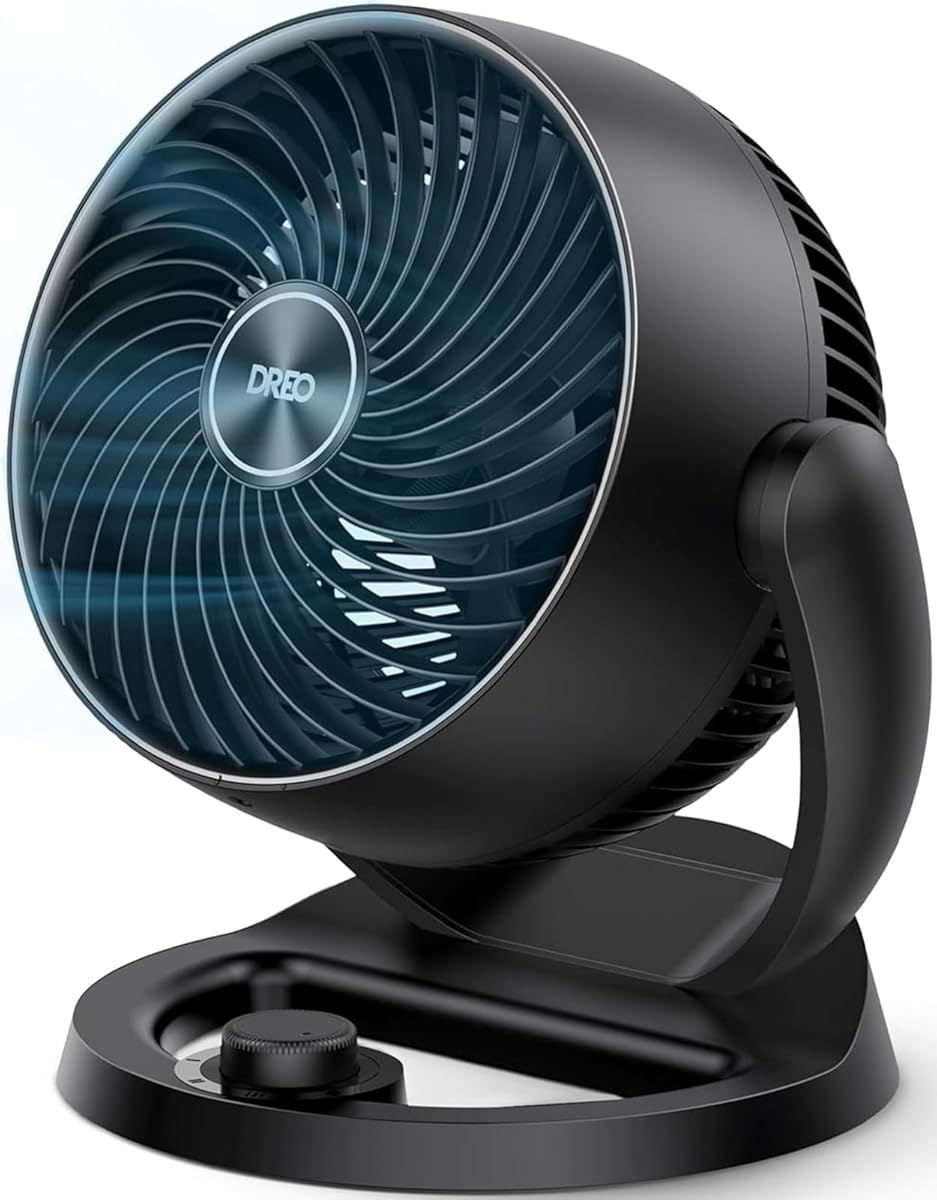
Mastering Small-Space Cooling: Essential Tips for Choosing a Quiet Air Circulator Fan
When you're shopping for a compact 12-inch air circulator fan like the DREO, the goal is efficient whole-room airflow without the disruptive noise of traditional fans. Understanding how features like blade design, motor quality, and oscillation range impact performance is crucial. This guide breaks down what really matters when selecting a desk or bedroom fan for year-round comfort.
Key Considerations Before Buying
- Noise level is critical for bedroom use—look for fans with a decibel rating near 25db, but remember that the quietest setting may compromise airflow, so check if multiple speeds offer a good balance.
- Airflow reach matters more than just blade size; a 70ft rating suggests a powerful motor and well-designed blades that can circulate air across a room, not just a few feet from the fan.
- Tilt and oscillation flexibility, such as the DREO's 120° adjustable tilt, is essential for directing air where you need it—whether you're at a desk, in bed, or in the kitchen—so ensure the adjustment range fits your typical usage scenarios.
What Our Analysts Recommend
In this category, prioritize fans with brushless DC motors for energy efficiency and quieter operation. Also, examine the build quality and stability—a fan with a wide base and sturdy grille is less likely to tip over. Finally, consider ease of cleaning: removable front grilles are a practical feature that many users overlook but greatly simplify maintenance.
Household Fans Market Context
Market Overview
The market for small household fans has shifted toward 'air circulators' that use aerodynamic blades to move air more effectively than traditional bladed fans. With the rise of smart home integrations and a focus on energy efficiency, many brands now offer remote-controlled, programmable fans with multiple modes. The DREO competes in this space by combining a compact form factor with high stated airflow and a low noise profile.
Common Issues
A frequent complaint across this category is that fans are either too noisy on higher speeds or too weak on lower ones, making it hard to find a comfortable middle ground. Another common issue is durability—some fans develop wobbling or motor noise after a few months of use. Additionally, many users report that oscillation mechanisms can fail or become less smooth over time.
Quality Indicators
To gauge quality, look for fans with a solid warranty (2+ years), positive user feedback on long-term reliability, and certifications like Energy Star. Also, check for consistent performance across reviews—if many reviewers mention the same positive or negative trait, it's likely a real characteristic. Finally, consider the brand's reputation for customer service and replacement parts availability.
Review Authenticity Insights
Grade B Interpretation
A Grade B authenticity rating with an estimated 10% fake reviews suggests that the vast majority of the 9,781 reviews are genuine, but a small fraction may be incentivized or artificially inflated. This is typical for a popular product, but it means you should still read reviews critically, focusing on those with verified purchase badges and detailed usage descriptions.
Trust Recommendation
You can generally trust the average rating of 4.67, but the adjusted rating of 4.40 (excluding suspicious reviews) is a more conservative estimate. When making your decision, weigh the product's features against your specific needs, and don't rely solely on the star rating—look for patterns in written feedback about noise, airflow, and build quality.
Tips for Reading Reviews
For this type of product, prioritize reviews that mention the fan's performance in specific room sizes or during heat waves, as these provide the most relevant context. Also, look for photos or videos that show the fan's actual size and operation—these can be more revealing than text alone. Be cautious of overly positive reviews that use generic language or lack specific details.
Expert Perspective
The DREO Fan for Bedroom appears to be a solid performer, backed by a high volume of reviews and a generally positive rating. The 12-inch size and 70ft airflow claim are competitive for its category, and the 25db noise level on low is a strong selling point for light sleepers. However, the 10% estimated fake review rate and the drop in adjusted rating suggest that some of the enthusiasm may be inflated, so it's wise to consider the lower bound of its performance.
Purchase Considerations
If you prioritize a quiet, space-saving fan with good airflow for a bedroom or office, this model is worth considering. But weigh the price against alternatives that might offer more features like remote control or smart app integration. Also, consider your room size—while 70ft is impressive, larger rooms may require a bigger fan or multiple units.
Comparing Alternatives
Shoppers should compare the DREO with other popular air circulators like the Vornado 660 or the Honeywell TurboForce, which also have strong followings and different feature sets. This comparison will help you determine which trade-offs—such as noise vs. power or price vs. features—are most important to you.


