
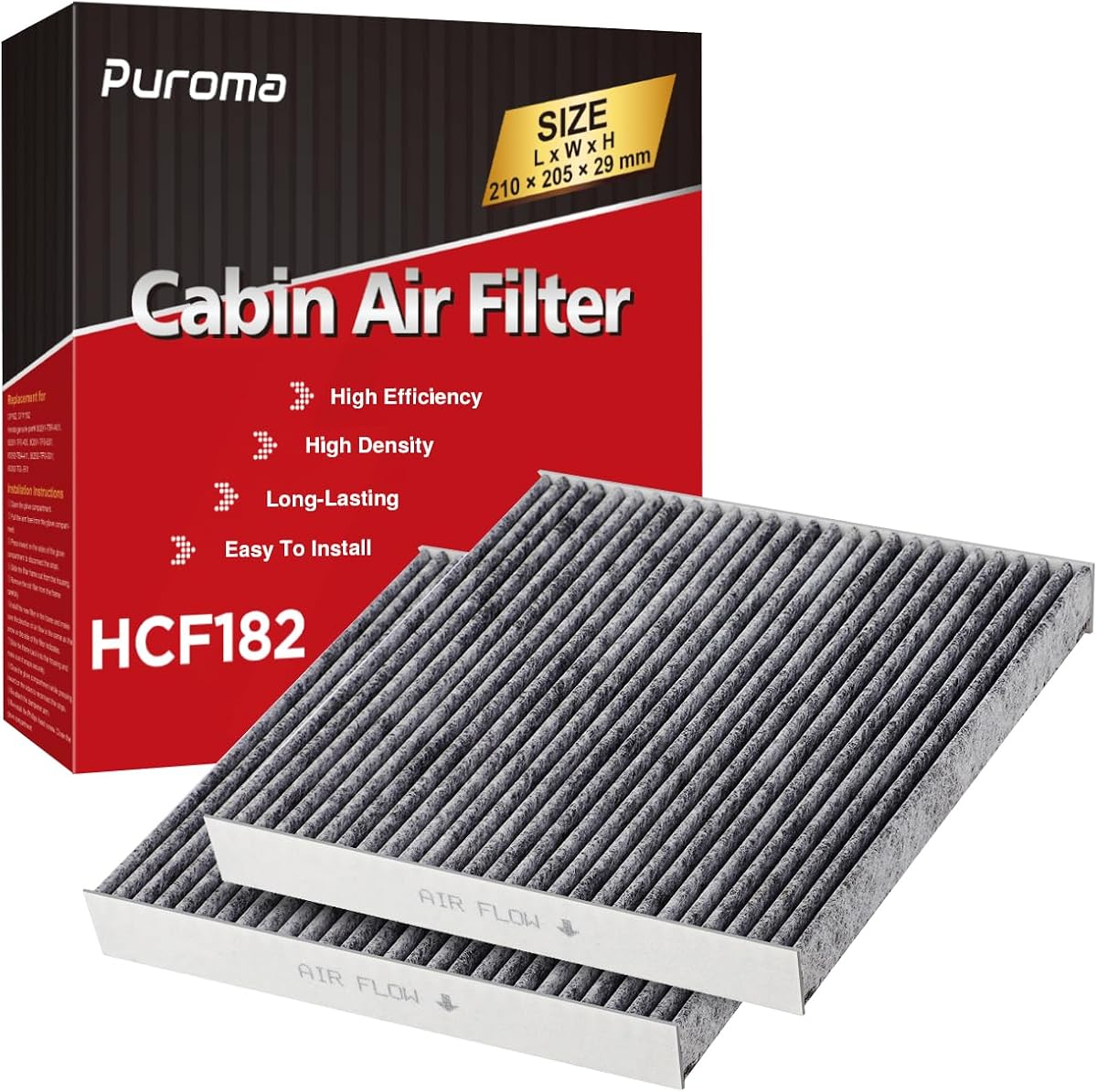
Cabin Air Filters: Fit, Carbon Layer, and Change Interval Matter
The Puroma 2-pack cabin air filter is designed to replace CP182 and CF11182 filters in a wide range of Honda and Acura vehicles, from the Civic and CR-V to the MDX and TLX. Because cabin filters are vehicle-specific, the most important thing to verify before buying is that your model year and trim match the listed cross-references. This dual-pack also includes an activated carbon layer, which helps trap odors and gases beyond basic particulate filtration.
Key Considerations Before Buying
- Confirm fitment by cross-referencing your owner's manual or the existing filter's part number against CP182 and CF11182. Honda and Acura often share filter sizes across generations, but mid-cycle changes can occur, so a quick check prevents returns.
- Decide whether you need the activated carbon layer. It adds odor and gas adsorption for urban driving or allergy seasons, but if you mainly want dust and pollen control, a standard particulate filter may cost less and flow slightly better.
- Plan for replacement frequency based on your environment. Most manufacturers recommend every 12,000 to 15,000 miles or once a year, but dusty regions, heavy pollen, or frequent recirculation use can shorten that interval—making a 2-pack a practical value.
What Our Analysts Recommend
A quality cabin filter should have evenly pleated media, a securely bonded carbon layer that doesn't shed, and a flexible frame that seals against the housing without gaps. Check that the filter is not overly flimsy or compressed in packaging, since a deformed frame can let unfiltered air bypass the media.
Passenger Compartment Air Filters Market Context
Market Overview
Cabin air filters are a mature, high-volume aftermarket category dominated by OEM suppliers and value brands like Puroma. With many vehicles sharing filter dimensions, cross-compatibility listings are common, and shoppers can often choose between basic particulate and carbon-infused options at similar price points. The rise of carbon filters reflects growing consumer awareness of interior air quality.
Common Issues
The most frequent problem is fitment confusion: a filter listed for a model may not fit every trim or model year, leading to poor sealing and reduced airflow. Another issue is quality inconsistency in budget filters, where pleat count, media thickness, and carbon adhesion vary. Buyers also sometimes expect odor elimination from a filter alone, when cabin odors often stem from system moisture or debris.
Quality Indicators
Look for clear cross-reference part numbers, consistent pleat density, and a rigid frame that holds its shape. Reviews that mention exact vehicle fit and airflow after installation are more useful than generic praise. A carbon layer should be visibly uniform and not flaking, and the filter should meet or exceed OEM dimensions.
Review Authenticity Insights
Grade B Interpretation
A Grade B authenticity rating with an estimated 10% fake review percentage means most reviews are likely genuine, but a small portion may be incentivized or exaggerated. The adjusted rating of 4.60/5, down from 4.80/5, suggests that after filtering suspicious reviews, the product still performs well. All reviews being verified purchases is a positive signal, though it does not guarantee authenticity.
Trust Recommendation
Trust the overall rating direction but focus on reviews that describe specific vehicles, model years, and installation experience. A 4.60 adjusted rating is strong for a consumable part, so the product is likely reliable for most buyers. Still, cross-check fitment independently rather than relying solely on review claims.
Tips for Reading Reviews
Prioritize reviews that mention the exact vehicle (e.g., 2019 CR-V) and note fit, airflow, or odor reduction. Be cautious of reviews that are overly brief or repeat marketing language. Look for patterns across multiple reviews about fitment or carbon shedding, as isolated complaints are less meaningful than recurring ones.
Expert Perspective
The Puroma 2-pack cabin air filter offers a practical value proposition for owners of compatible Honda and Acura models, with a broad cross-reference list covering many popular vehicles. Its activated carbon layer adds odor and gas adsorption at a price point typical of basic filters. The strong adjusted rating and verified-purchase reviews suggest satisfactory real-world performance, though the Grade B authenticity score warrants some caution. Overall, it is a reasonable choice for routine maintenance if fitment is confirmed.
Purchase Considerations
Weigh the convenience of a 2-pack against your actual replacement schedule—if you drive in clean conditions, one filter may last a year, so the second filter could sit unused. Confirm the carbon layer is important for your needs, and check the return policy in case of fitment issues. Compare pleat count and frame rigidity with OEM specifications if you are sensitive to airflow.
Comparing Alternatives
Shoppers should compare with OEM filters and other aftermarket brands that specify pleat count, media type, and exact vehicle fit, especially if odor control or high airflow is a priority.


