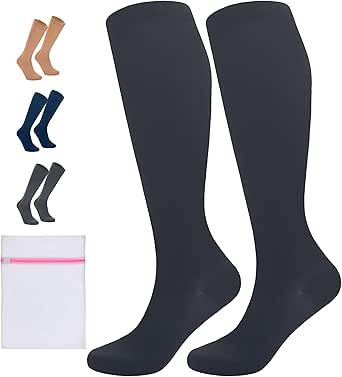
Choosing 20-30 mmHg Compression Socks: Fit, Fabric, and Function
The CAMBIVO 2 Pairs Compression Socks deliver graduated 20-30 mmHg compression, a therapeutic range commonly used for flight travel, long shifts, and post-run recovery. Because this is a two-pair pack, buyers should evaluate both the compression accuracy and the durability of the knit before committing.
Key Considerations Before Buying
- Compression level accuracy is critical: 20-30 mmHg is a medical-grade range, so verify that the socks actually deliver graduated pressure (strongest at the ankle, easing toward the calf) rather than uniform tightness that can restrict circulation.
- Sizing must be based on calf and ankle circumference, not shoe size alone; a poor fit in this range can cause rolling, pinching, or loss of therapeutic benefit, so check the brand's size chart carefully before ordering.
- Fabric blend and breathability matter for multi-hour wear; look for moisture-wicking synthetic blends with enough elastane to hold compression through repeated washes without bagging or losing rebound.
What Our Analysts Recommend
Quality compression socks in this class should have flat, seamless toe seams, a reinforced heel and sole, and clearly labeled mmHg ratings. Check that the cuff stays put without digging in, and prefer brands that publish a sizing guide based on measured limb circumference rather than generic S/M/L labels.
Socks Market Context
Market Overview
The compression sock market has expanded rapidly beyond medical supply stores into athletic and travel retail, with 20-30 mmHg products now marketed for flight, nursing shifts, running recovery, and standing professions. This growth has produced wide variation in actual compression performance, with some budget multi-packs falling short of their stated mmHg ratings.
Common Issues
Common complaints in this category include socks that are too tight at the calf cuff, compression that fades after a few washes, seams that irritate toes, and sizing that runs inconsistently between colors or batches. Buyers also report difficulty putting on true 20-30 mmHg socks, which is a normal characteristic of this compression class rather than a defect.
Quality Indicators
Reliable compression socks typically disclose their mmHg range and testing method, use graduated knitting visible in the fabric density, and hold shape after repeated washing. Reinforced heels and toes, flat seams, and consistent sizing across a multi-pack are practical markers of better manufacturing.
Review Authenticity Insights
Grade A Interpretation
A Grade U with a 0.00% estimated fake review rate and zero reviews means there is not yet enough review data to assess authenticity either way; the grade reflects insufficient signal rather than confirmed trustworthiness or confirmed manipulation.
Trust Recommendation
Treat this listing as unproven: with no rating history, buyers should rely on the stated specifications, the brand's sizing chart, and the return policy rather than social proof. Consider purchasing a single pack first to test fit and compression before committing to larger orders.
Tips for Reading Reviews
Once reviews accumulate, prioritize detailed reviews that mention calf and ankle measurements, hours worn, and wash durability over star ratings alone. Be skeptical of reviews that praise compression without referencing fit or sizing, since those are the most common failure points for 20-30 mmHg socks.
Expert Perspective
The CAMBIVO two-pair compression socks target a legitimate therapeutic compression range with a multipack value proposition, but the absence of any review history means performance claims are unverified. For a medical-adjacent product, that gap matters more than it would for a low-stakes accessory, because fit and compression accuracy directly affect whether the socks help or hinder. The product's stated use cases—flight, long shifts, running—are appropriate for 20-30 mmHg, but buyers should confirm the brand's sizing methodology before purchase.
Purchase Considerations
Weigh the multipack savings against the risk of an untested fit, and check whether the seller offers returns on opened hosiery, which many retailers restrict. If you have circulatory conditions or are purchasing for medical reasons, consult a clinician about the appropriate compression class before relying on an over-the-counter 20-30 mmHg sock.
Comparing Alternatives
Shoppers should compare this product with established compression sock brands that publish mmHg testing data and have substantial verified review histories before deciding.