
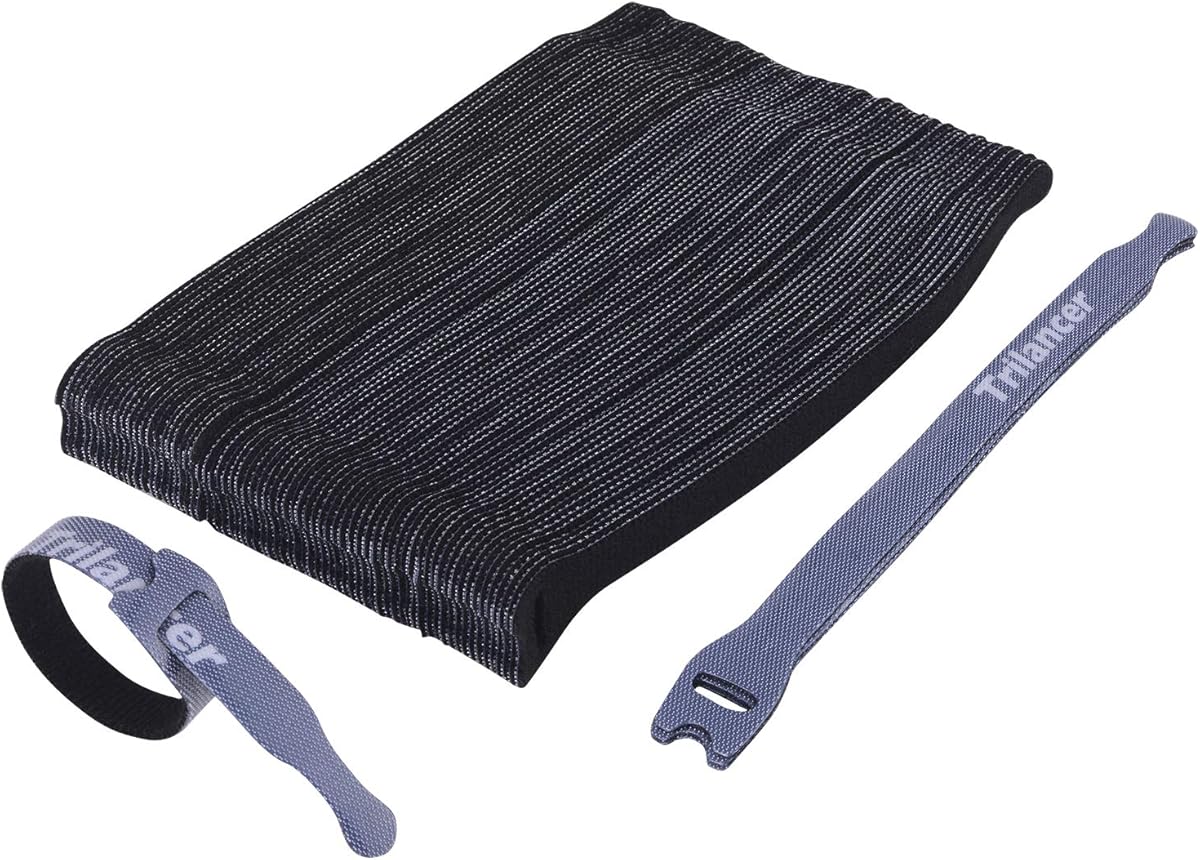
Choosing Reusable Cable Straps: What Matters for 20cm Adjustable Organizers
When selecting reusable cable straps like the Trilancer 20cm pack, focus on the tension mechanism's durability and the strap's material flexibility. These specific 20cm black straps offer a middle ground between small desk organizers and heavy-duty bundling solutions, making them ideal for home office setups and moderate cable management tasks.
Key Considerations Before Buying
- The adjustable buckle design must maintain tension through repeated use cycles without slipping, a common failure point in reusable ties.
- Consider the 20cm length specifically—it's versatile for most household electronics but may be insufficient for thick cable bundles or longer runs requiring continuous support.
- The nylon material should have enough rigidity to hold shape but sufficient flexibility to avoid cracking when wrapped around irregular objects.
What Our Analysts Recommend
Examine the buckle's locking teeth—they should be well-defined and engage securely with the strap's textured surface. Quality reusable straps maintain consistent tension across multiple uses without significant deformation, unlike single-use ties that sacrifice reusability for maximum holding strength.
Cable Ties Market Context
Market Overview
The reusable cable tie market has expanded significantly as consumers seek sustainable alternatives to disposable plastic ties, with adjustable fasteners now dominating the home organization segment. Products like the Trilancer 20cm straps compete primarily on durability cycles and ease of adjustment rather than sheer holding strength.
Common Issues
Many reusable straps suffer from buckle mechanisms that weaken after 10-15 uses or straps that develop memory bends preventing proper re-tightening. Inconsistent material quality can lead to premature cracking, especially in colder environments where nylon becomes brittle.
Quality Indicators
Look for straps with reinforced buckle edges and uniform material thickness throughout the 20cm length. High-quality reusable ties feature textured grip surfaces that engage securely with the buckle's teeth without requiring excessive force to adjust.
Review Authenticity Insights
Grade B Interpretation
The Grade B authenticity rating with 15% estimated fake reviews suggests generally reliable feedback but warrants careful review scrutiny. This indicates most reviews reflect genuine experiences, though some may be incentivized or artificially positive.
Trust Recommendation
Focus on verified purchase reviews that mention specific use cases like computer desk organization or holiday light management, as these demonstrate actual product application. Be cautious of reviews lacking detail about how the straps performed through multiple use cycles.
Tips for Reading Reviews
Prioritize reviews discussing long-term performance over several months and those comparing these 20cm straps to other lengths or brands. Look for mentions of the buckle's durability after repeated adjustments, as this reveals genuine usage patterns.
Expert Perspective
The Trilancer 20cm reusable straps present a solid mid-market option with their 4.50 adjusted rating reflecting reliable performance for typical household applications. The high proportion of verified purchases and specific usage descriptions in reviews suggests these straps perform well for basic to moderate cable management tasks. Their 20cm length makes them particularly suitable for organizing computer peripherals, entertainment centers, and small electronic projects where adjustability matters more than maximum tensile strength.
Purchase Considerations
Consider whether you truly need reusable functionality versus disposable ties—if you frequently reconfigure setups, the reusable feature justifies the premium. Evaluate your bundle diameters, as 20cm straps work best for groupings under 2 inches; larger bundles may require longer or heavy-duty options.
Comparing Alternatives
Compare these against similar 20cm reusable straps from brands like Velcro or Vastar, particularly examining buckle design differences and material flexibility ratings.


