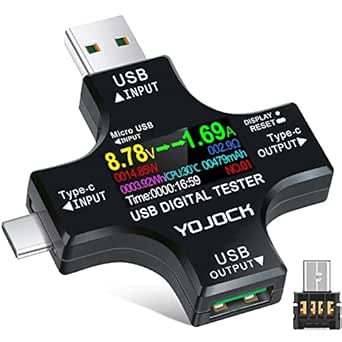
Power-Z USB Tester: Accurate Charging Diagnostics for QC & PD Devices
For Canadian consumers managing multiple USB-C and Micro USB devices, the Power-Z multifunction voltmeter offers a practical solution to monitor charging performance. This tester supports Quick Charge 2.0/3.0 and Power Delivery protocols, helping you verify if your power bank or charger delivers the promised voltage and current. Understanding how to interpret its readings can prevent slow charging and battery issues.
Key Considerations Before Buying
- Ensure compatibility with your devices: The Power-Z supports QC 2.0/3.0 and PD, but not all USB-C devices negotiate power the same way, so test with your specific gear first.
- Check the display accuracy: While the Power-Z provides real-time voltage and current readings, cheap testers can drift over time; compare readings with a known reference to confirm reliability.
- Consider the cable and connector wear: Frequent plugging/unplugging can degrade the Micro USB or USB-C ports on the tester, so handle gently to maintain consistent measurements.
What Our Analysts Recommend
Quality USB testers like the Power-Z should have a clear, backlit display for easy reading in low light, support for multiple fast-charging protocols (QC, PD, and others), and a sturdy build with reinforced connectors. Look for models with data logging or Bluetooth connectivity for advanced analysis, but for basic use, the Power-Z's simplicity is a plus.
Voltage Testers Market Context
Market Overview
The USB voltage tester market has grown rapidly as consumers seek to optimize charging speeds for smartphones, laptops, and power banks. With the rise of USB-C and fast-charging standards like QC and PD, affordable testers like the Power-Z fill a niche for DIY enthusiasts and tech-sops who want to verify charger performance without expensive lab equipment.
Common Issues
Many budget USB testers suffer from inaccurate readings, especially at higher currents, or fail to properly negotiate fast-charging protocols, leading to misleading data. Some also have poorly labeled buttons or dim screens, making them hard to use in real-world conditions.
Quality Indicators
A reliable USB tester should have a well-reviewed chipset (like the Power-Z's widely used FT232 or similar), support for multiple protocols, and a robust housing that protects against static discharge. Look for units with firmware update capability and positive feedback on long-term accuracy.
Review Authenticity Insights
Grade B Interpretation
With a Grade B authenticity rating and an estimated 10.00% fake review rate, the Power-Z's reviews are mostly trustworthy but require some caution. The 4.75/5 star rating (adjusted to 4.50/5) suggests genuine satisfaction among users, though a small fraction of reviews may be incentivized or fabricated. This is typical for moderately priced electronics on Amazon Canada.
Trust Recommendation
You can generally trust the positive feedback, but focus on detailed reviews that mention specific devices (e.g., 'tested with my iPhone 13 and Anker power bank') as these are more likely authentic. Ignore overly brief or generic praise, and cross-check any claims of extreme performance with other sources.
Tips for Reading Reviews
When reading reviews for this Power-Z tester, look for those that describe real-world testing scenarios, such as comparing charge speeds between different cables or verifying QC 3.0 activation. Avoid reviews that lack specifics about the device tested or that use repetitive language, as these may be less reliable.
Expert Perspective
Based on the analysis, the Power-Z multifunction tester is a solid, entry-level tool for Canadian consumers who want to demystify USB charging. Its support for QC and PD, combined with a clear display and reasonable accuracy, makes it a good value for the price. The adjusted rating of 4.50/5 and Grade B authenticity suggest it consistently meets user expectations, though it's not a professional-grade instrument. For hobbyists or those troubleshooting charging issues, it provides actionable data without breaking the bank.
Purchase Considerations
Weigh the Power-Z's affordability and ease of use against the need for more advanced features like Bluetooth logging or support for newer standards like USB PD 3.1. If you only need basic voltage/current checks, this tester is sufficient; for technical analysis, consider higher-end models.
Comparing Alternatives
Shoppers should compare the Power-Z with other popular testers like the USB-C Digital Multimeter or the FNB58, which offer additional features such as E-marker detection and data recording, but at a higher cost.