Choosing 15-foot HDMI cables: Why length, certification, and durability matter
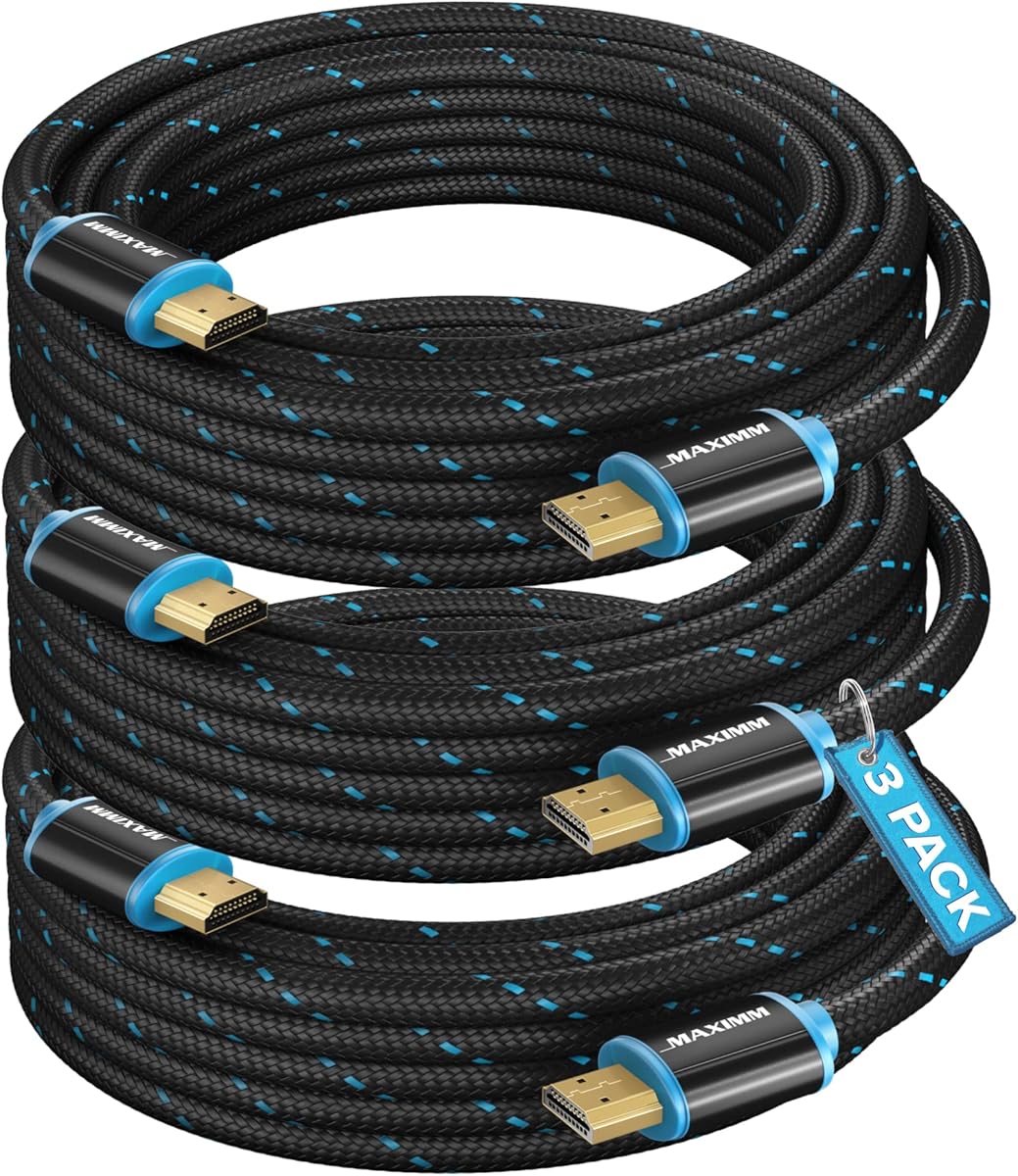
When selecting HDMI cables for 4K setups, the 15-foot length of these Maximm cables presents specific considerations. This distance is common for wall-mounted TVs or home theater configurations where source components are placed further away, making signal integrity and build quality critical factors.
Key Considerations Before Buying
- The 18Gbps bandwidth of this HDMI 2.0 cable supports 4K at 60Hz with HDR, but verify your source device (like a 4K Blu-ray player or gaming console) actually outputs this signal to utilize the full capability.
- HDCP 2.2 compliance is essential for playing protected 4K content from streaming services; a cable without proper certification may cause handshake failures or resolution downgrades.
- The nylon braiding on these cables provides strain relief and tangle resistance, which is particularly valuable for permanent installations where cables may be routed through walls or behind furniture.
What Our Analysts Recommend
For 15-foot runs, check for gold-plated connectors to prevent corrosion and ensure stable connections over time. The three-pack format suggests these are designed for multi-device setups—consider if you need to connect a gaming console, streaming box, and soundbar simultaneously. Look for explicit mention of ARC (Audio Return Channel) support if you plan to send audio from your TV back to a sound system.
HDMI Cables Market Context
Market Overview
The HDMI cable market is saturated with products claiming 4K support, but actual performance at longer lengths like 15 feet varies significantly between brands. Many cables meet the basic HDMI 2.0 specification but differ in construction quality and reliability over time.
Common Issues
Longer HDMI cables can experience signal degradation, resulting in intermittent black screens or sparkles in the image. Another frequent problem is incompatibility with specific devices despite meeting specifications, often due to poor connector tolerances or insufficient shielding against interference.
Quality Indicators
Beyond specifications, quality cables feature robust strain relief at connector junctions, consistent braiding without loose threads, and clear certification labeling. For 15-foot lengths, adequate shielding (often noted as 'foil and braid') is crucial to prevent electromagnetic interference from power cables or wireless devices.
Review Authenticity Insights
Grade B Interpretation
A Grade B authenticity rating with 10% estimated fake reviews indicates generally reliable feedback, though shoppers should remain cautious of overly enthusiastic 5-star reviews. The 3.70 adjusted rating (down from 3.88) suggests some positive reviews may be artificially inflated.
Trust Recommendation
Focus on verified purchase reviews that mention specific use cases, like connecting a PlayStation 5 at 4K60 or issues with ARC functionality. The natural distribution of ratings—including critical 1-star reviews—adds credibility to the overall feedback.
Tips for Reading Reviews
Pay particular attention to reviews discussing performance at the full 15-foot length and compatibility with specific devices like Apple TV 4K or NVIDIA Shield. Look for patterns in negative reviews: if multiple users report similar issues with handshake problems or durability, these are likely genuine concerns.
Expert Perspective
The Maximm 3-pack represents a value-oriented solution for users needing multiple mid-length HDMI connections. The nylon braiding and stated specifications are appropriate for typical 4K setups, though the 3.70 adjusted rating suggests some quality control variability. The inclusion of HDCP 2.2 and ARC support makes these cables functionally complete for modern home theaters. For basic 4K streaming and gaming at 60Hz, these cables should perform adequately, though demanding applications like 4K120 gaming would require HDMI 2.1 cables instead.
Purchase Considerations
Consider whether you truly need three 15-foot cables—this bundle offers savings per cable but may leave you with extras. Evaluate your installation: permanent in-wall runs might warrant more expensive certified cables, while temporary connections could justify this budget option. Check if your devices support the enhanced audio formats (like Dolby Atmos) that pass through ARC.
Comparing Alternatives
Shoppers should compare single-cable prices against this bundle and verify competing products offer similar construction quality at equivalent lengths.