Digital Caliper Buying Guide: Accuracy, Materials, and Features That Matter
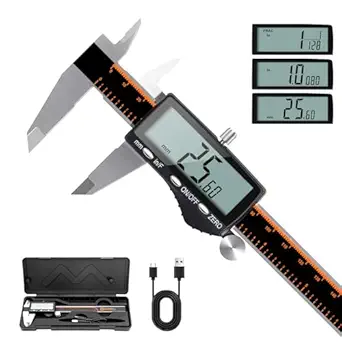
When you're in the market for a digital caliper like the 0-6 inch/150 mm model with carbon fiber construction and an extra-large LCD, it's essential to look beyond the surface. This category of precision measuring tools varies widely in quality, with key differences in measurement consistency, build durability, and user interface. Understanding what separates a reliable tool from a frustrating one can save you both time and money.
Key Considerations Before Buying
- Measurement accuracy and repeatability: Look for calipers that specify an accuracy of ±0.02 mm or better. In practice, this means consistent readings across multiple measurements, which is critical for tasks like 3D printing or machining where even a 0.1 mm error can ruin a part.
- Material and build quality: Carbon fiber is lightweight and resistant to corrosion, but not all carbon fiber calipers are created equal. Check for a solid, non-flexing frame and a smooth-gliding thumb roller. A caliper that feels flimsy in hand often leads to inconsistent measurements.
- Display readability and battery life: An extra-large LCD is a plus, but also consider the auto-off feature. Ensure the display updates quickly without lag, and that the auto-off doesn't kick in too soon, cutting off your workflow. Also, check what battery it uses—common types like LR44 are convenient to replace.
What Our Analysts Recommend
Quality indicators include a zeroing function that resets instantly, a locking screw that holds measurements firmly, and a depth rod that is rigid and accurate. Also, verify that the inch/metric conversion is smooth and that the caliper doesn't produce any 'drift' in readings over time. A well-regarded caliper should feel precise and responsive in every function.
Digital Calipers Market Context
Market Overview
The digital caliper market is saturated with options ranging from budget-friendly to professional-grade. Many calipers in this price range (typically $20-$50) aim to offer a balance of features, but they often compromise on materials or sensor quality. The inclusion of carbon fiber is a differentiator, as it's lighter and more durable than plastic, though not as robust as stainless steel for heavy industrial use.
Common Issues
The most frequent complaints across digital calipers include battery drain, inaccurate readings at high or low temperatures, and a sticky or rough sliding mechanism. Another common issue is that the display may be difficult to read under certain lighting conditions, despite being 'extra large.' Some users also report that the auto-off feature activates too quickly, which can be annoying during extended measuring sessions.
Quality Indicators
For a caliper in this class, look for a brand with a track record in measurement tools, a clear warranty, and a user manual that is accurate. The presence of a protective case is also a sign of better build quality. Reviews that mention consistency across multiple units or after months of use are strong indicators of reliability.
Review Authenticity Insights
Grade B Interpretation
The product holds a Grade B for review authenticity with an estimated 10% fake reviews, which is relatively low compared to many electronics and tools on Amazon. This suggests that while the majority of reviews are genuine, there is a small but noticeable portion that may be incentivized or otherwise less trustworthy. The adjusted rating of 4.30/5 (down from 4.56) reflects this, indicating a slightly more realistic picture of user satisfaction.
Trust Recommendation
Given the moderate fake review percentage, you can generally trust the overall sentiment, but it's wise to focus on reviews that mention specific use cases and provide details about the product's performance over time. Look for reviews from verified purchasers who mention using the caliper for tasks like 3D printing, woodworking, or metalworking, as they tend to be more reliable.
Tips for Reading Reviews
When reading reviews for digital calipers, pay attention to comments about the smoothness of the slide, the clarity of the LCD from various angles, and the accuracy of the zero setting. Also, note any reviews that mention the product arriving with a dead battery or with a calibration that was off—these are red flags. Cross-reference reviews with photos or videos if available to see the product in action.
Expert Perspective
This electronic digital caliper offers a compelling package with its carbon fiber body and large LCD, but the authenticity data suggests it's not without flaws. The 4.30 adjusted rating indicates that a majority of users are satisfied, but there are enough mixed experiences to warrant caution. The carbon fiber material is a notable feature at this price point, providing a good balance of weight and durability for hobbyists and light professional use.
Purchase Considerations
Weigh the importance of the carbon fiber build and extra-large display against the potential for minor accuracy issues that some users report. If you require absolute precision for professional machining, you might consider investing in a higher-end stainless steel caliper. For general DIY, 3D printing, and educational purposes, this caliper is likely adequate, but ensure you test it against a known standard upon arrival.
Comparing Alternatives
Shoppers should compare this with other digital calipers in the same price range, particularly those from brands like iGaging or Neiko, which have established reputations for consistency. Look for models that offer similar features but with more user reviews that are uniformly positive over a longer period.