
Choosing a Rock Tumbler: Balancing Durability, Noise, and Patience for Polishing Success
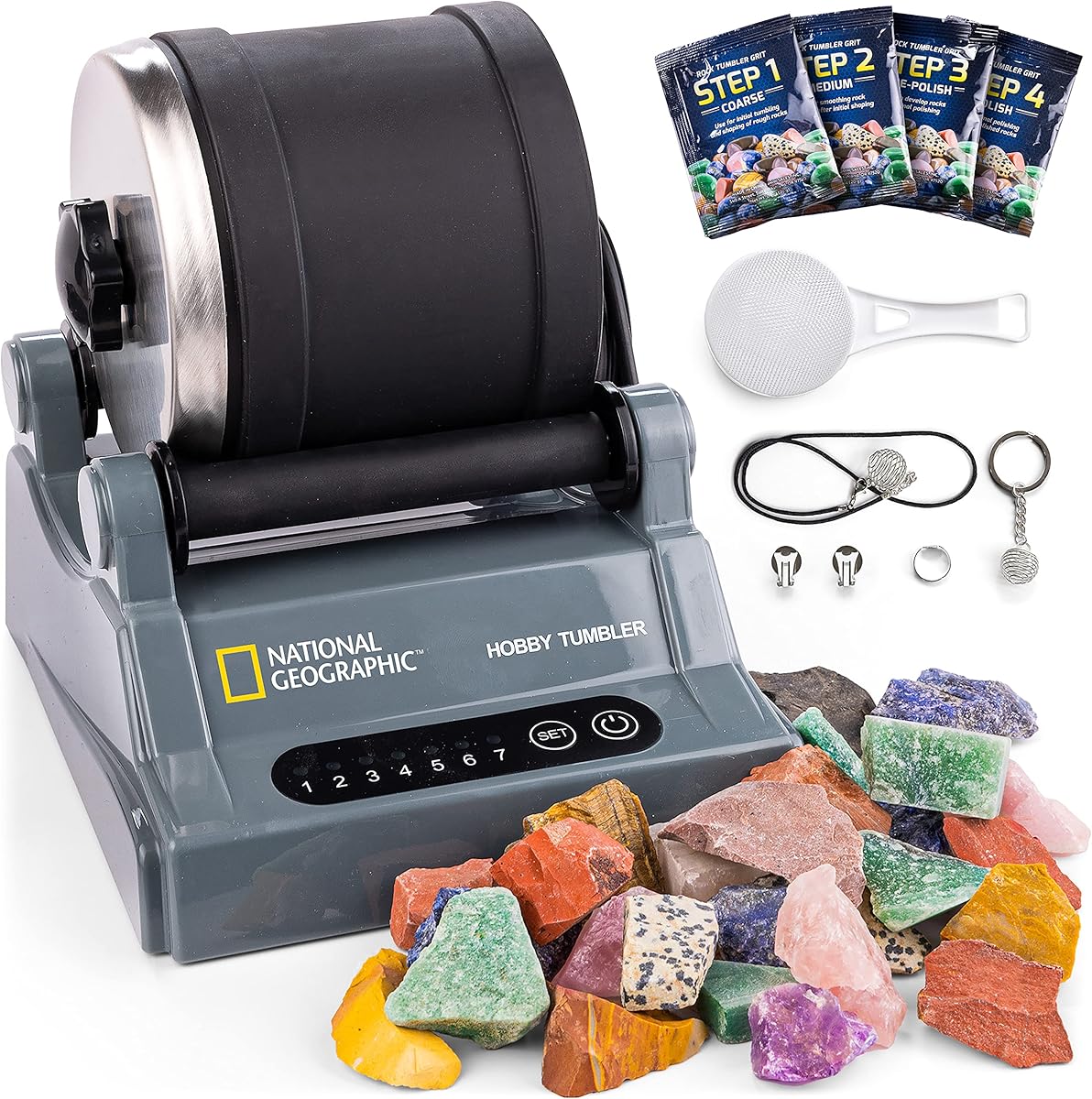
The National Geographic Hobby Edition represents an entry-level rotary tumbler designed for beginners, featuring a single 1-pound barrel and four-stage grit system. Buyers should understand that rock tumbling is a multi-week process requiring consistent maintenance, not a quick craft activity. This specific kit includes rough Brazilian agate and other stones, but the quality of included rough material varies between batches.
Key Considerations Before Buying
- The single-barrel design means you can only process one grit stage at a time, extending the complete polishing cycle to 4-6 weeks minimum.
- Motor durability is a key factor; this model uses a DC motor with a belt drive system that some users report can struggle with unbalanced loads or extended continuous runs.
- Noise levels around 60-70 decibels (similar to a vacuum cleaner) require placement considerations, as tumbling runs continuously for days during each grit stage.
What Our Analysts Recommend
Quality indicators include a leak-resistant barrel with a silicone gasket (this model uses a rubber O-ring), a motor with thermal overload protection, and clear grit labeling with proper micron progression. The National Geographic kit includes a 120/220 silicon carbide coarse grit, 500 aluminum oxide pre-polish, and two polishing oxides—a complete but basic progression system.
Rock Tumblers Market Context
Market Overview
The hobby rock tumbler market is dominated by rotary models like this National Geographic kit, with vibratory tumblers reserved for more serious enthusiasts due to higher cost and faster results. STEM/educational positioning has increased demand for beginner kits, but many compromise on component durability for price point. The 'Hobby Edition' designation typically indicates lighter construction than 'professional' or 'commercial' models.
Common Issues
Most complaints center on barrel leaks (often from improper sealing or worn O-rings), motor burnout after several cycles, and inconsistent polish results due to improper grit ratios or contaminated barrels. The included rough gemstones sometimes include materials with varying hardness that don't polish uniformly in the same batch.
Quality Indicators
Superior tumblers feature metal gears instead of plastic, double-sealed barrels, and motors rated for continuous duty with proper ventilation. The belt drive system in this model is quieter but potentially less durable than direct-drive gear systems found in higher-end tumblers like Thumler's models.
Review Authenticity Insights
Grade B Interpretation
A Grade B authenticity rating with 11% estimated fake reviews suggests generally reliable feedback, but shoppers should be cautious of overly enthusiastic 5-star reviews that lack specific process details. The adjusted 4.40 rating (down from 4.67) indicates genuine reviews are slightly more critical than the overall average suggests.
Trust Recommendation
Focus on reviews that mention specific grit stages, tumbling durations, or stone types rather than generic 'my kids loved it' comments. The high review count (24,861) provides substantial data—look for patterns in mid-range (3-4 star) reviews that detail actual use experiences over multiple tumbling cycles.
Tips for Reading Reviews
Prioritize reviews discussing second or third batches with personally collected rocks, as these test the tumbler's durability beyond the included materials. Reviews mentioning 'replacement parts' or 'customer service' experiences are particularly valuable for assessing long-term reliability concerns.
Expert Perspective
This National Geographic kit serves its purpose as a first tumbler with reasonable success rates for the included materials, though durability concerns emerge after 3-4 complete polishing cycles. The 4.40 adjusted rating accurately reflects its position as a beginner-friendly but not professional-grade tool. The included grits are sufficient for basic polishing, but serious enthusiasts will need to purchase additional grits and polishing compounds for optimal results on harder materials. The educational materials and STEM focus add value for family use, offsetting some technical limitations.
Purchase Considerations
Consider your patience level—this hobby requires weeks of noisy operation for results. Evaluate whether you'll primarily use included stones (which work reasonably well) or transition to found rocks (which may require additional coarse grit). The single barrel means no overlapping batches, significantly limiting throughput compared to dual-barrel models.
Comparing Alternatives
Compare with the Dan&Darci starter kit for similar pricing but different motor design, or consider investing in a Thumler's Model B if planning frequent use beyond the initial materials.


