
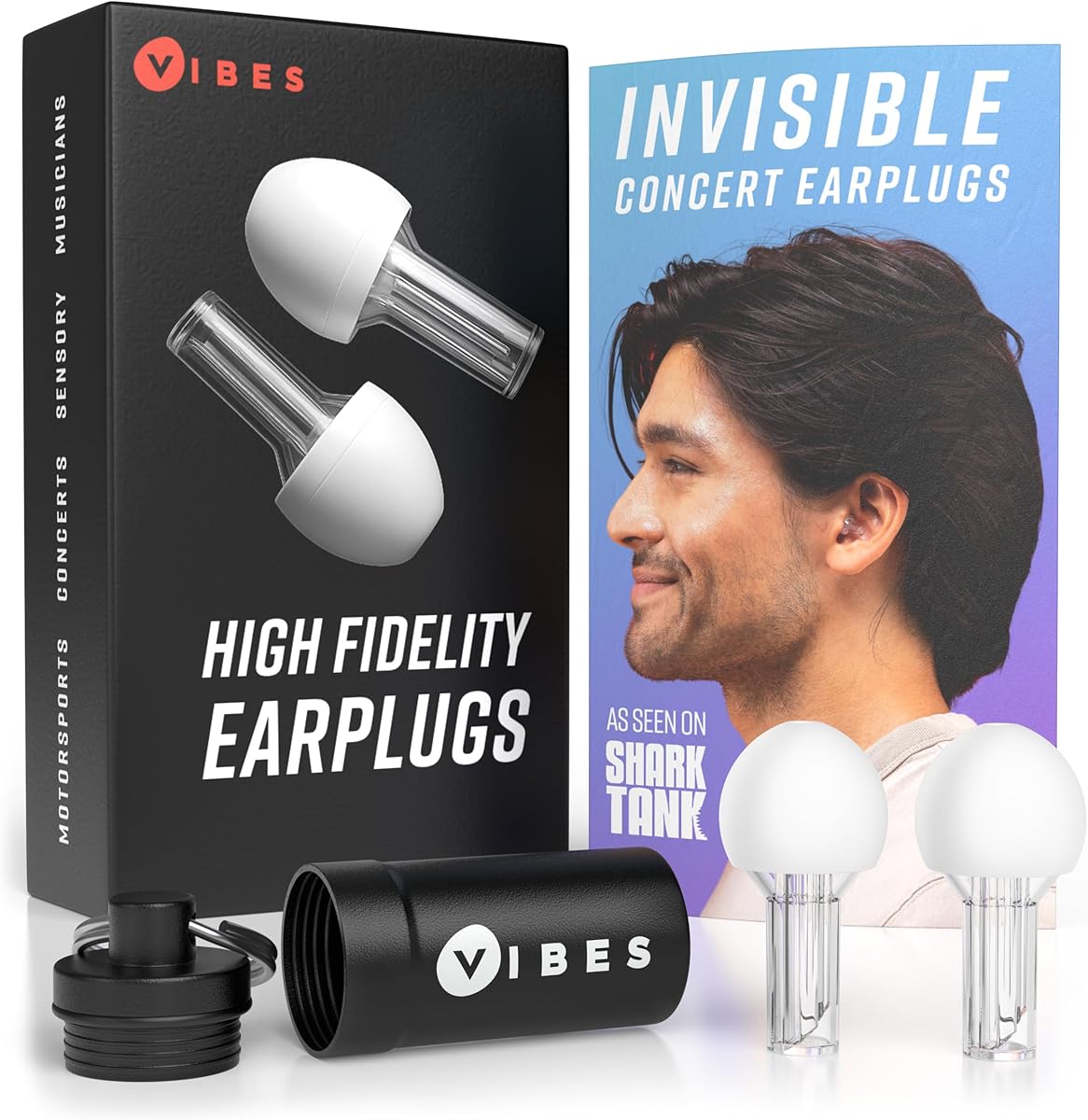
High-Fidelity Earplugs: What Concertgoers and Sensory-Sensitive Users Should Know
Vibes acoustic-filter earplugs are designed to lower volume without muffling sound, making them popular for concerts, festivals, and managing tinnitus or sensory processing issues. With a 4.22 rating across nearly 14,000 reviews, they sit in a crowded field of high-fidelity options, so understanding fit, filter design, and use case is key.
Key Considerations Before Buying
- Check the attenuation rating and filter type: Vibes use a tuned acoustic filter to reduce decibels fairly evenly across frequencies, which preserves music clarity better than foam plugs but may not suit extremely loud environments like industrial noise.
- Fit and comfort matter for hours-long wear: these are reusable plugs with interchangeable tips, so users with narrow or wide ear canals should confirm the tip sizes included and expect a short adjustment period.
- Consider your primary use case: concertgoers often prioritize sound fidelity, while people with tinnitus or autism spectrum sensory sensitivities may value consistent noise reduction and ease of insertion more than perfect tonal balance.
What Our Analysts Recommend
Look for a stated decibel reduction (often around 15–22 dB for music plugs), a filter that is not just a solid attenuator, and clear cleaning instructions. Reusable plugs should include a carrying case and multiple tip sizes, and quality models specify materials like hypoallergenic silicone.
Earplugs Market Context
Market Overview
The high-fidelity earplug market has grown rapidly as concerts, festivals, and sensory-friendly spaces become more common, with brands competing on filter design, comfort, and transparency. Many products now target both music lovers and people with tinnitus or autism, blurring the line between hearing protection and accessibility tools.
Common Issues
A frequent complaint is that plugs either muffle sound too much or don't reduce enough volume, and fit problems can cause discomfort or poor sealing. Some users also report that filters clog with earwax or that the plugs are hard to insert correctly without practice.
Quality Indicators
Quality high-fidelity plugs typically publish a noise reduction rating or attenuation chart, use replaceable filters, and offer a range of tip sizes. Strong warranties, clear care instructions, and consistent performance across reviews are better signals than marketing claims alone.
Review Authenticity Insights
Grade B Interpretation
A Grade B with an estimated 10% fake review rate means the majority of reviews for these Vibes earplugs appear genuine, but a small portion may be incentivized or inauthentic. The adjusted rating of 4.00 versus the displayed 4.22 suggests the genuine sentiment is slightly lower but still solid.
Trust Recommendation
Trust the overall pattern of reviews but treat perfect scores with mild skepticism; focus on the adjusted 4.00 rating as a more realistic baseline. Look for reviewers who mention specific venues, tinnitus management, or sensory needs, as these are harder to fake and more useful.
Tips for Reading Reviews
When reading reviews for earplugs, prioritize those that describe fit, comfort over several hours, and sound quality in specific settings like concerts or noisy offices. Be wary of reviews that only praise the product without mentioning how it performed in a real use case.
Expert Perspective
Vibes earplugs sit in the mid-range of the high-fidelity market, with a large review base that includes concertgoers and people managing tinnitus or sensory sensitivities. The adjusted 4.00 rating and Grade B authenticity suggest a generally reliable product, though not without some mixed experiences around fit and durability. The brand's focus on acoustic filtering rather than simple attenuation aligns with current best practices for music-focused hearing protection.
Purchase Considerations
Weigh whether you need maximum decibel reduction or tonal accuracy, and check the included tip sizes against your ear canal comfort. If you have severe tinnitus or clinical sensory needs, consult an audiologist, as over-the-counter plugs may not provide sufficient or consistent protection.
Comparing Alternatives
Shoppers should compare Vibes with other high-fidelity earplugs that publish attenuation data and offer similar filter designs, as fit and comfort vary significantly between brands.


