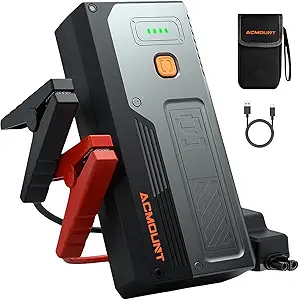
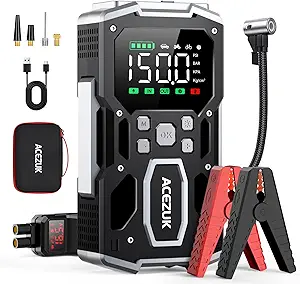
What to Know Before Buying a 1000A Lithium Jump Starter
A 1000-amp lithium jump starter like the NOCO Boost GB40 is designed to crank engines up to roughly 6.0L gas or 3.0L diesel, replacing bulky lead-acid booster packs with a pocket-sized power bank. But amp ratings, cable quality, and safety circuitry vary widely, so understanding how these specs translate to real-world starts matters more than the headline number.
Key Considerations Before Buying
- Match the peak amp rating to your engine size, not just your vehicle type. The GB40's 1000A suits most passenger cars and light trucks, but a full-size diesel may demand a 1500A–2000A unit for reliable cold-weather cranking.
- Consider climate: lithium jump starters lose cranking power in extreme cold, so Canadian buyers should look for units rated to at least -20°C and store them indoors during winter months.
- Check the cable and clamp design — thin gauge cables or loose clamps waste current and can overheat, while heavy-gauge copper cables with strong spring clamps deliver the full rated amps to a dead battery.
What Our Analysts Recommend
Quality jump starters pair high-discharge lithium cells with intelligent safety circuitry that prevents reverse polarity, overcurrent, and sparking at the clamps — NOCO's UltraSafe system is a good example of this. Look for a built-in flashlight, USB charging output, and a clear state-of-charge indicator, since a jump starter you forget to recharge is useless when you need it most.
Jump Starters Market Context
Market Overview
The jump starter market has shifted decisively from heavy lead-acid booster boxes to compact lithium-ion packs, and the category is now crowded with brands claiming 1000A–3000A peak ratings at wildly different prices. As lithium cells have become cheaper, budget units have proliferated, making safety certification and honest amp ratings harder for shoppers to verify.
Common Issues
The most frequent complaints in this category are inflated peak-amp claims that don't match real cranking performance, units that fail after a season of sitting uncharged, and clamps that are too short or too flimsy to reach awkward battery terminals. Cold-weather performance is another recurring pain point, particularly for Canadian drivers.
Quality Indicators
Reputable jump starters carry clear safety certifications, specify both peak and cranking amps, and include detailed operating temperature ranges. Strong indicators of quality include a lithium battery management system, reverse-polarity protection, and a manufacturer warranty of at least one year backed by responsive support.
Review Authenticity Insights
Grade B Interpretation
An A authenticity grade with an estimated 5% fake review rate is unusually clean for a high-volume Amazon listing — over 127,000 reviews with only a small manipulated fraction suggests the 4.89/5 rating reflects genuine user experience. The adjusted 4.80/5 still points to a product that reliably performs as advertised.
Trust Recommendation
You can treat the aggregate rating as broadly trustworthy, but weight reviews that describe specific scenarios — winter starts, engine sizes, how long the unit held charge — more heavily than star-only ratings. A 5% fake rate means roughly one in twenty reviews may be unreliable, so pattern-matching across many detailed reviews is the safer approach.
Tips for Reading Reviews
For jump starters, prioritize reviews mentioning the reviewer's vehicle and climate, since a unit that works flawlessly on a warm-weather sedan may struggle with a cold diesel truck. Also scan for mentions of long-term storage and recharge habits, as battery degradation over months is the most common failure mode reviewers report.
Expert Perspective
The NOCO Boost GB40 sits in the sweet spot of the lithium jump starter market: enough power for most passenger vehicles, a well-regarded safety system, and a review history large and authentic enough to trust. Its 4.80/5 adjusted rating across 127,000+ reviews is a strong signal of consistent real-world performance rather than a flash-in-the-pan listing. The main caveat is that 1000A is not a universal solution — drivers of large diesel engines or heavy-duty trucks should size up.
Purchase Considerations
Weigh your engine displacement and local winter temperatures against the GB40's 1000A rating before buying, and factor in whether you'll actually remember to recharge it every few months. If you drive a compact or mid-size vehicle and want a dependable, portable backup, this unit's track record is hard to argue with.
Comparing Alternatives
Shoppers should still compare the GB40 against higher-amp NOCO models and competing brands at similar price points, especially if they own larger vehicles or face harsh winters.