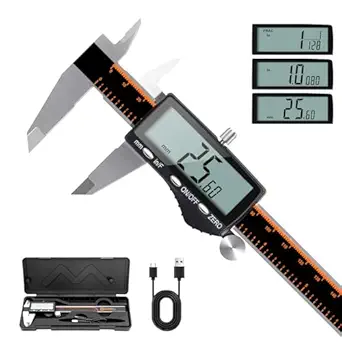
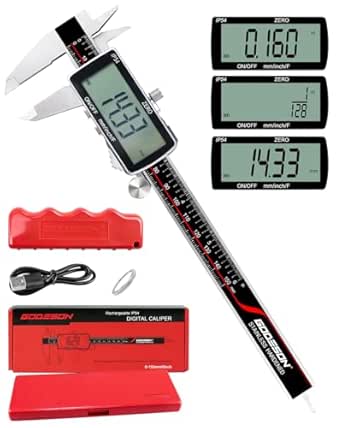
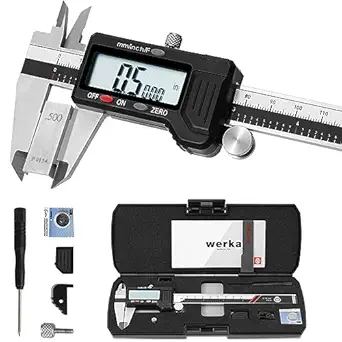
What to Know Before Buying a Fractional Digital Caliper
The General Tools 147 stands out in the digital caliper market by displaying measurements in fractional inches (like 1/16"), decimal inches, and millimeters—a rare feature that appeals to woodworkers and machinists who think in fractions. This 6-inch caliper sits in the mid-range price bracket, so understanding its specific strengths and limitations is key to a smart purchase.
Key Considerations Before Buying
- Fractional display is the headline feature: it shows 1/64" resolution in fractions, which is ideal for reading drill sizes, bolt diameters, or woodworking dimensions without mental math. Confirm you need this—decimal-only calipers are often cheaper and just as accurate.
- Build quality and battery life matter: the 147 uses a standard LR44 battery and stainless steel body, but some users report the battery compartment can be finicky. Look for reviews mentioning battery drain or display flicker as potential QC issues.
- Accuracy and resolution: with 0.001" (0.02mm) resolution and ±0.001" accuracy, it's suitable for hobbyist and light professional use. For high-precision machining or calibration-critical work, consider a higher-end caliper with a certificate of calibration.
What Our Analysts Recommend
Check for smooth jaw movement and a clear, responsive LCD—cheap calipers often have gritty slides or sluggish displays. Also verify that the fractional mode rounds correctly (e.g., 0.5" shows as 1/2") and that the zero button works reliably at any position, as these are common failure points in budget digital calipers.
Digital Calipers Market Context
Market Overview
Digital calipers have become affordable and ubiquitous, with dozens of brands offering similar specs. However, fractional-display models remain a niche, and General Tools is one of the few reputable brands offering this feature at a reasonable price. The market is split between no-name budget calipers (under $20) and established brands like Mitutoyo or Starrett (over $100), leaving mid-range options like the 147 to compete on features and brand trust.
Common Issues
Common complaints in this category include inconsistent zeroing, battery drain when left idle, and poor fit of the battery cover. Fractional models add another layer: rounding errors or confusing fraction displays can frustrate users if the firmware isn't well implemented. General Tools has a mixed reputation for QC, so checking reviews for specific defects is wise.
Quality Indicators
A quality digital caliper should have a stainless steel body (not plastic), smooth thumb roller, and a display that's easy to read at angles. For fractional models, test the rounding logic: 0.0625" should show as 1/16", not 1/8". Also look for auto-off to preserve battery life and a locking screw to hold measurements.
Review Authenticity Insights
Grade B Interpretation
A Grade B authenticity rating with an estimated 10% fake review rate means most reviews are genuine, but there's a small risk of inflated ratings. The adjusted rating of 4.60/5 (down from 4.89) suggests that even after removing suspicious reviews, the product is well-liked—a strong signal. The fact that all reviews are verified purchases adds credibility, as fake reviews often lack that badge.
Trust Recommendation
You can generally trust the overall sentiment, but be cautious of reviews that are overly brief or generic (e.g., 'Works great!'). Focus on reviews with specific details about fractional display accuracy, battery life, or build quality. Given the 10% fake estimate, it's worth cross-referencing with reviews on other sites or forums like Reddit's r/woodworking or r/machinists.
Tips for Reading Reviews
For calipers, prioritize reviews that mention calibration, repeatability, or specific use cases (e.g., 'used for reloading' or 'checked against gauge blocks'). Look for patterns: if multiple reviews mention the battery dying quickly, that's likely a real issue. Also, sort by 'Most Recent' to catch any changes in manufacturing quality over time.
Expert Perspective
The General Tools 147 is a solid choice for woodworkers, DIYers, and hobbyists who want fractional readings without spending a lot. Its 4.6/5 adjusted rating from 853 reviews indicates high satisfaction, though the 10% fake review estimate means you should read critically. The fractional display is a genuine differentiator, but the mid-range price means it competes with decimal-only calipers that may have better build quality. If you need fractions daily, it's worth it; otherwise, consider a simpler model.
Purchase Considerations
Weigh the value of the fractional feature against potential QC issues. If you're using it for precision machining, invest in a higher-end caliper with a calibration certificate. For general shop use, the 147 is likely sufficient, but check the return policy in case you get a unit with a sticky slide or battery drain. Also, consider whether you need the 6-inch size—most tasks are covered, but 8-inch models exist for larger work.
Comparing Alternatives
Compare with decimal-only calipers from brands like iGaging or Mitutoyo if fractions aren't essential, and consider budget options if this is for occasional use. The market has many choices, so read our other reviews to find the best fit.