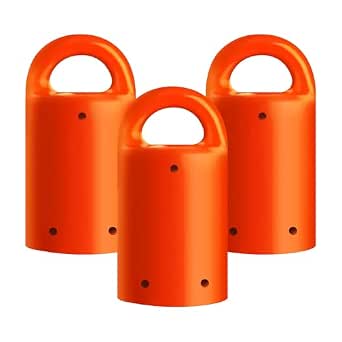
Magnetic Stud Finders: Why Simplicity Often Beats Electronic Sensors
Unlike electronic stud finders that rely on batteries and calibration, magnetic stud finders detect the screws or nails used to fasten drywall to studs. This product's exceptional 4.89-star rating across nearly 30,000 reviews suggests it excels at this straightforward task, offering a reliable, no-frills alternative for common wall-mounting projects.
Key Considerations Before Buying
- Magnetic stud finders work best on drywall attached with standard screws or nails; they won't detect studs behind lath and plaster or other non-standard wall materials. Confirm your wall construction before relying on this method.
- The strength of the magnet directly affects performance. A stronger magnet will snap to fasteners through thicker drywall and provide a more obvious signal, reducing the chance of missing a stud in walls with heavy texture or multiple layers.
- Look for a design that includes a marking mechanism, such as a built-in pencil holder or a groove for a marker. This allows you to quickly note the stud location without fumbling for separate tools, which is especially helpful when working alone.
What Our Analysts Recommend
Quality magnetic stud finders use neodymium magnets, which are significantly stronger than ceramic magnets and provide a more definitive 'pull' when passing over a fastener. A durable housing that won't crack if dropped and a compact size that fits in a toolbelt are also signs of thoughtful design. Avoid models with weak magnets that require multiple passes or fail to hold their position on the wall.
Stud Finders Market Context
Market Overview
The stud finder market is dominated by electronic models that offer features like deep scanning and AC detection, but these come with higher price tags and the need for batteries. Magnetic stud finders occupy a niche for budget-conscious DIYers and professionals who prefer a tool that never needs calibration or power. The strong review base for this product indicates that many users find the magnetic approach sufficient for everyday tasks.
Common Issues
A frequent complaint with magnetic stud finders is that they can be less effective on walls with thick layers of paint or texture, which may mask the magnetic field. Another issue is that some models have magnets that are too weak, leading to false negatives or requiring repeated passes. Users also report that very small magnets can be difficult to grip and may be easily lost.
Quality Indicators
High-quality magnetic stud finders typically feature a strong neodymium magnet, a robust build (often metal or reinforced plastic), and a design that allows for easy marking. Brands that provide clear instructions and a satisfaction guarantee are also good indicators. Reading reviews that mention specific wall types and fastener sizes can help gauge real-world performance.
Review Authenticity Insights
Grade A Interpretation
An A authenticity grade with only 5% estimated fake reviews is exceptional for any product category, especially given the high volume of reviews. This means the 4.89-star rating is largely trustworthy, and the adjusted 4.80 rating still reflects overwhelming customer satisfaction. The negligible proportion of suspicious reviews suggests minimal manipulation.
Trust Recommendation
You can confidently use the review data to inform your purchase, but still focus on reviews that describe specific use cases (e.g., hanging shelves, locating studs in older homes) to see if the product matches your needs. Pay attention to reviews that mention the magnet's strength and the tool's durability, as these are key differentiators.
Tips for Reading Reviews
When reading reviews for magnetic stud finders, prioritize those that mention the type of wall (drywall, plaster) and the fastener (screws, nails) they were able to detect. Look for comments about magnet strength and ease of marking. Ignore generic praise and seek out detailed anecdotes about successful and failed attempts to gauge reliability.
Expert Perspective
With a 4.89-star average from nearly 30,000 reviews and a high authenticity grade, this magnetic stud finder appears to be a standout in its category. The adjusted rating of 4.80 suggests that even after accounting for potential fake reviews, customer satisfaction remains exceptionally high. This indicates a product that reliably performs its core function: locating studs via fasteners. For DIYers and pros alike, it offers a dependable, low-tech solution that avoids the frustrations of electronic calibration.
Purchase Considerations
Consider your wall types: if you have standard drywall with screws, this tool will likely serve you well. However, if you often work with plaster walls or need to detect pipes and wiring, an electronic stud finder with multiple modes may be worth the extra cost. Also, assess whether you need a marking feature or prefer a minimalist design.
Comparing Alternatives
While this magnetic stud finder is highly rated, shoppers should compare it with electronic stud finders if they require advanced features like deep scanning or AC detection. Magnetic models are generally more affordable and simpler to use, but electronic ones offer versatility for complex projects.